Furnace Safety Inspection
Checks for leaks, venting, and carbon monoxide risks.
Safety every homeowner needs
Carbon monoxide is the safety topic every furnace owner should understand, because it gives no warning of its own. You cannot see it, smell it, or taste it, and the first signs in a person can feel like ordinary tiredness or a headache. The good news is that alarms, venting care, and regular checks make this risk manageable in any Wyoming home.
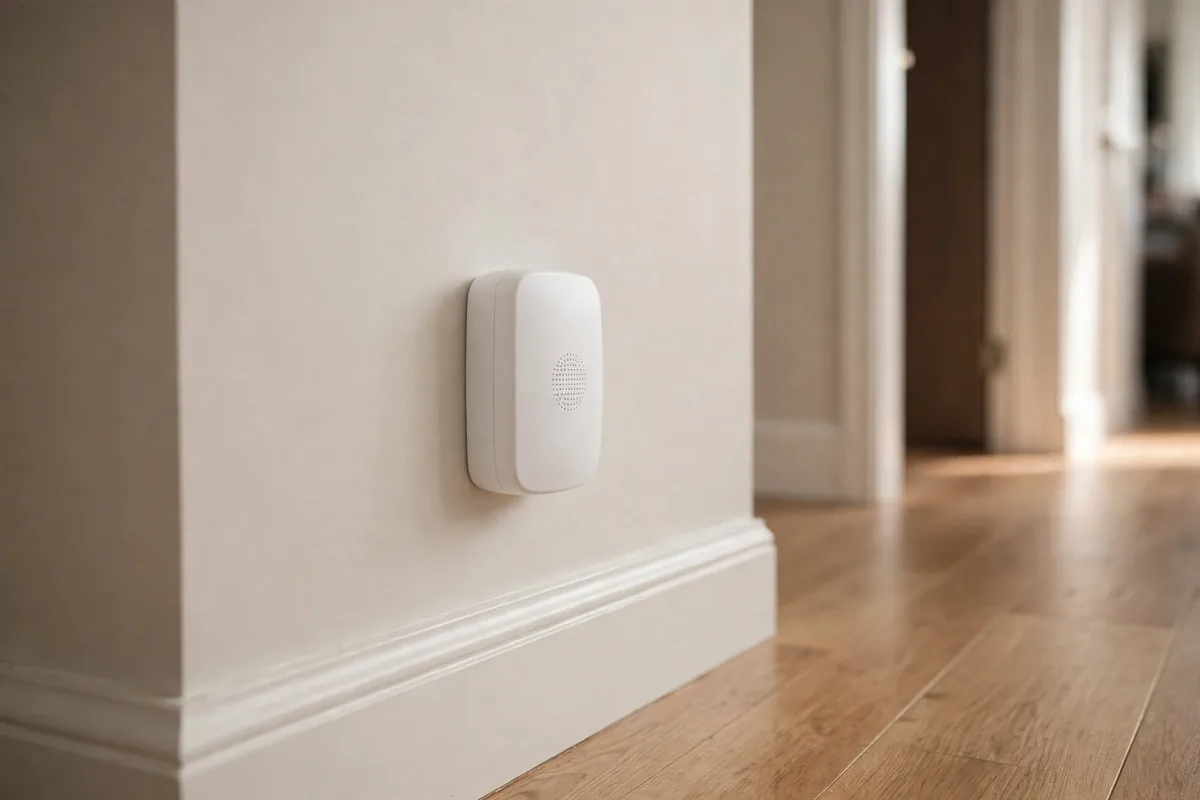
Carbon monoxide is a gas made when fuel burns without enough air. Gas and propane furnaces make it as part of normal combustion, and a healthy venting system carries it outside before it can build up indoors. Trouble starts when combustion goes wrong or venting is blocked, and the gas then has nowhere to go but into the living space.
Because the gas is invisible and odorless, people often miss it. Headaches, dizziness, tiredness, and nausea in a home with a running furnace should never be brushed off, especially if more than one person feels unwell at once or pets seem affected too. If you suspect it, leave the house and get help from outside rather than hunting for the source indoors.
A cracked heat exchanger is the most serious route, because it opens a path between flame and the air that flows through your ducts. Soot buildup, a burner running poorly, and a vent blocked by snow, ice, or a bird nest can also push combustion gases back into the house instead of outside. Wyoming wind adds another route: a strong gust can disturb a vent that is already weak or poorly placed.
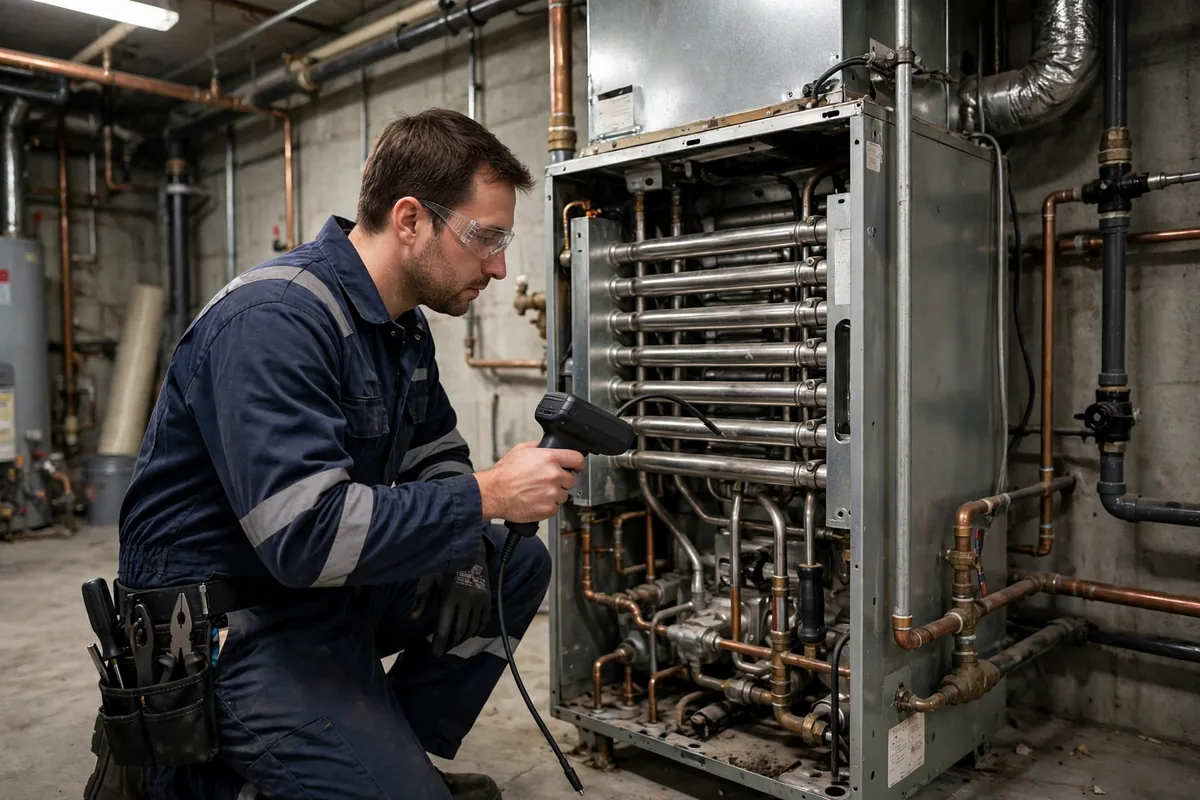
Age and neglect raise the odds. A furnace that has never had its exchanger checked, a vent that has not been looked at since install, and a chimney shared with other appliances all deserve attention. Our heat exchanger checks look for cracks and soot, and our furnace safety inspection covers venting, burners, and alarms together. The EPA carbon monoxide pages at what carbon monoxide is explain the same routes in official terms.
Worried about furnace safety or an alarm? Call Frontier Heating and we will help.
Call (307) 309-8601A carbon monoxide alarm is not a luxury in a home with a fuel-burning furnace. It is the one device that speaks up when the gas itself stays silent. Place alarms on each level of the home and near sleeping areas, following the alarm instructions for height and distance from the furnace, and test them monthly so a dead battery does not quietly remove your backup.
An alarm does not replace venting care or furnace checks. It is the last line, not the first. Think of it as three layers working together: a furnace that burns cleanly, vents that carry gases outside, and an alarm that warns if either layer fails. Any one layer alone is thinner than all three together.
Leave the house at once, taking everyone and pets with you, and do not stop to open windows or hunt for the furnace fault. Once outside, call emergency services and describe the alarm, then stay out until responders say the house is safe. Opening windows on the way out can delay help and does not make the house safe to re-enter.
After responders clear the house, get the furnace checked before running it again. An alarm that sounded once can sound again if the underlying fault is still there, and a check that finds a cracked exchanger or blocked vent turns a frightening night into a fixed problem. Keep the alarm in place, note the date, and do not silence it and carry on as if nothing happened.
No, because an electric furnace has no flame and burns no fuel, so it makes no combustion gases. A home with only electric heat still benefits from alarms if it has a gas water heater, fireplace, or attached garage, but the furnace itself is not the source.
Most alarms have a limited service life, and the unit itself will signal when it reaches the end of that life. Check the date on the back, test monthly, and replace the alarm when it signals or reaches its stated life, not just when the battery runs low.
Opening windows does not make a house safe to stay in, and it can slow responders who need to find the source. Leave first, call from outside, and let responders decide when the house is safe. Fresh air helps once you are already out.
Nothing. It has no smell, no color, and no taste, which is why alarms matter so much. A gas smell in a home is a different gas, added to natural gas on purpose so leaks can be smelled, and it needs its own urgent response.
Alarms can sound from low batteries, age, or a fault in the alarm itself, but never assume that is the cause. Leave the house and let responders check. A false alarm is a small inconvenience. A missed real alarm is not.
Alarms belong on each level and near sleeping areas, following the alarm instructions. A single alarm in the basement does not protect a bedroom two floors up. Coverage across levels is what gives everyone time to leave the house safely.
Yes, drifting snow can bury a low vent or intake pipe, and that blockage can push combustion gases back indoors. After windy storms, check outside vents before assuming a shutdown is a furnace fault. Clear vents are a safety habit, not just a comfort one.
Yes, before running it again. An alarm means something produced the gas or the alarm itself failed, and either answer needs a check. A technician can test the exchanger, venting, and burners and tell you whether the furnace is safe to run.
Older units carry higher risk when exchangers crack, burners soot up, or vents age, but age alone does not decide it. A well-kept older furnace with sound venting can be safe, while a neglected newer one can fail. Condition and checks matter more than age.
Call Frontier Heating for a furnace safety check for your Wyoming home.
Call (307) 309-8601