01
Emergency Furnace Repair
A Cheyenne no-heat call in a windstorm starts with venting and ignition, since drifts and gusts shut furnaces down in ways calm towns rarely see.
Capital city heat
Cheyenne sits where the high plains meet the Laramie Mountains, and the wind here does not take days off. A furnace in this city runs long hours against steady wind chill, and when it quits, the house cools fast. We repair furnaces across Cheyenne, from the brick homes near the Capitol to the newer streets on the north and east sides.
The pattern we see most often is simple: wind pushes cold air through old window frames, attic hatches, and rim joists, the furnace runs longer to keep up, and a weak part that survived a mild week gives out during a windy cold snap. That is why a Cheyenne repair starts with the furnace itself and ends with a look at how the house is losing heat.
Cheyenne weather
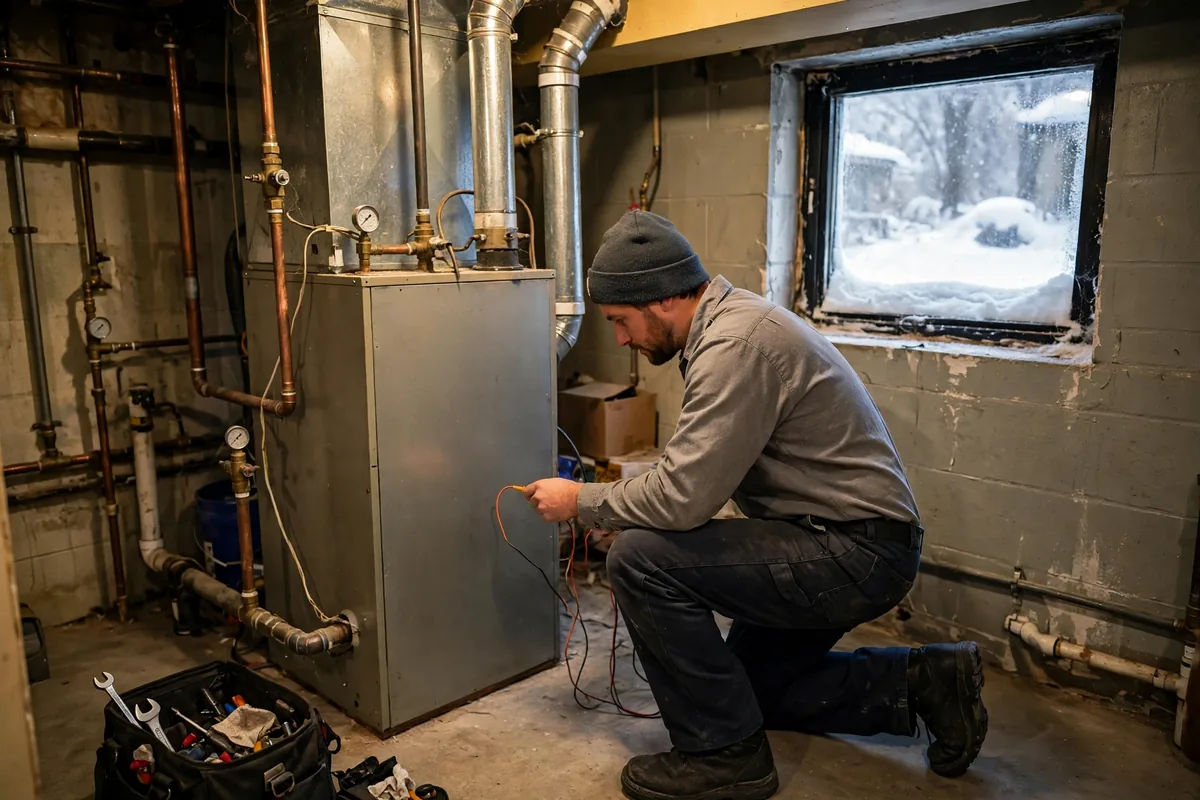
Cheyenne wind is the local furnace problem. A steady plains wind drives cold air into a house through gaps a calm day never reveals, so the furnace cycles more often and runs longer, and parts like igniters, flame sensors, and blower motors wear sooner than they would in a sheltered town. The fix is rarely just a part swap: we check airflow, venting, and the rooms that never seem to warm up.
Drifting snow brings a second Cheyenne trouble. High-efficiency furnaces vent through sidewall pipes, and a wind-driven drift can bury an intake or exhaust pipe overnight, which shuts the furnace down on a safety lockout. If your furnace stopped after a windy snow, check that the outside pipes are clear of snow before you assume the worst, and call us if the unit still will not run.
Where we work
Cheyenne is a spread-out capital city, and furnace trouble looks different from one side of town to the other. Downtown and the historic districts hold older homes with basements and long duct runs, the north side mixes ranch houses with newer builds, and the south side and the Ranchettes area include larger lots where a furnace may serve a bigger footprint and a garage or addition.
That spread matters because a repair visit in Cheyenne is never just about the furnace model. We ask which side of town you are on, how old the house is, and which rooms lose heat first, since those answers point to duct trouble, an aging blower, or a venting problem faster than a model number alone.
These Cheyenne areas and nearby communities are the places we serve most often in Laramie County.
Capitol North Historic DistrictSunnysideWestern HillsSaddle RidgeEagle RidgeHarmony MeadowsBison RunDakota CrossingSouth GreeleyFox Farm-College
Cheyenne ZIP codes we cover: 82001, 82007, 82009, 82010.
Wind knocked your heat out in Cheyenne? Call us and tell us what the furnace is doing now.
Call (307) 309-8601Cheyenne homes
Cheyenne housing runs from early brick homes in the historic districts to ranch houses from the middle of last century and newer subdivisions on the edges of town. The older homes often have basements, tall ceilings, and ductwork added in stages, which means some rooms get plenty of heat while others stay cold. We balance that by checking dampers, duct runs, and return air, not just the furnace cabinet.
State government offices, the air base on the west side, rail yards, and warehouse work shape the city, and many Cheyenne homes sit close to busy roads or open ground where wind hits hard. A furnace sized for a calm lot can struggle on an exposed corner, so we look at the house and its lot together when a system keeps falling behind on windy nights.
Finding your way
Cheyenne is easy to place: the Wyoming State Capitol anchors downtown, the old depot sits nearby, and Frontier Park lies just north of the center, with Interstate 25 running north and south and Interstate 80 running east and west through town. F.E. Warren Air Force Base sits on the west side, and the airport sits to the north, so most addresses fall naturally into a downtown, north side, south side, or west side pattern.
When you call, naming the nearest landmark helps us more than a street number alone, because it tells us the age and style of housing nearby and the wind exposure of that part of town. A home near open ground north of Frontier Park faces different wind than a sheltered brick home near the Capitol, and we plan the visit with that in mind.
Three places anchor a Cheyenne visit: the Wyoming State Capitol downtown, the Cheyenne Depot Museum nearby, and Frontier Park to the north. Together they mark the center of town, and most furnace calls fall within a short drive of one of them.
Through the year
Fall in Cheyenne is the time to catch furnace trouble, because the first hard wind usually arrives before the first deep snow, and a weak igniter or dirty flame sensor shows up on that first long run. Winter brings the real test: long cold stretches with wind that never quite stops, when a furnace that short-cycles or blows lukewarm air needs attention right away, not at the next thaw.
Spring brings rapid warm-ups and chinook winds that swing indoor temperatures up and down, which exposes thermostats that read a sunny wall instead of the living space. Summer is quiet for furnaces here, but it is the right season for a tune-up and duct check, since the work is unhurried and any part that needs ordering can arrive before the wind returns. The United States Department of Energy explains furnace basics at energy.gov, and its guidance matches what we check on a Cheyenne visit.
Furnace help
Cheyenne homes need the full range of furnace work, because the city mixes historic houses, ranch homes, and new builds. Each job below is written for Cheyenne conditions, not copied from another town.
01
A Cheyenne no-heat call in a windstorm starts with venting and ignition, since drifts and gusts shut furnaces down in ways calm towns rarely see.
02
A new furnace for a windy Cheyenne lot needs ductwork that can push heat to the far rooms, so we plan the install around the house, not just the cabinet.
03
When a Cheyenne furnace keeps failing in cold wind, replacement beats another patch, especially in older homes where parts are getting scarce.
04
A fall tune-up in Cheyenne catches weak igniters and dirty sensors before the first windy cold snap turns them into a night without heat.
05
Gas furnaces heat most Cheyenne homes, and wind-driven vent trouble plus long run times are the two things we watch closest on them.
06
Electric furnaces show up in Cheyenne additions and smaller homes, where a dead heating element or sequencer can leave one zone cold while the rest warms.
07
Homes on the Cheyenne edges beyond the gas main lean on propane, and cold wind makes tank level and line condition matter more than most owners expect.
08
A blower motor that groans through a Cheyenne winter usually failed from long run hours, so we check the wheel, capacitor, and duct resistance together.
09
Cracked heat exchangers are a safety matter anywhere, and in Cheyenne they often show up as soot, odd flames, or a furnace that trips again and again.
10
A thermostat on a sunny Cheyenne wall lies about the house temperature, so we move or recalibrate controls that keep calling for heat at the wrong time.
11
Cheyenne ductwork added in stages over decades leaves some rooms starved, and we trace runs and returns before we blame the furnace for a cold room.
12
A safety inspection in Cheyenne puts venting first, because wind and drifting snow can block a flue or sidewall pipe that looked fine in summer.
13
Manufactured homes around Cheyenne heat differently, with compact furnaces and crossover ducts that need a careful eye after a windy winter.
14
Cheyenne shops, offices, and base-adjacent buildings need commercial furnaces that hold steady through long hours, so we check controls and airflow as a system.
15
Zoned controls help a Cheyenne house with a cold north side and a warm south side, by sending heat where the wind is stealing it instead of heating every room alike.
Local answers
Wind can push snow against sidewall vent pipes and can also drive cold air into the house faster than the furnace can replace it. A blocked intake or exhaust pipe trips a safety switch and locks the furnace out, which is why a furnace that ran fine yesterday can stop on a windy night. Clearing snow from the pipes sometimes restores heat, but a unit that keeps locking out needs a technician to check venting, pressure switches, and ignition.
North-facing rooms and rooms at the end of long duct runs are the usual cold spots in Cheyenne, because wind strips heat from those walls while the duct run loses warmth along the way. A room over a garage or above an unheated space has the same trouble. We check damper settings, duct leaks, and return air in those rooms, since adding a bigger furnace rarely fixes a duct problem on its own.
Older Cheyenne homes often have tall ceilings, basements, and ductwork added in stages, so a new furnace has to match the duct system and the heat loss of the house, not just the square footage. A unit that is too large short-cycles and leaves rooms uneven, while one that is too small runs constantly on windy nights. A proper visit measures the house before recommending a size.
Look for the white plastic pipes that exit through a side wall or the roof, and check whether snow has drifted against them or ice has sealed the opening. A furnace that tries to start, runs briefly, then stops, or flashes a fault, often has a vent problem. Do not run the furnace with a blocked vent, and call us if clearing the snow does not bring steady heat back.
Cheyenne wind raises a house heat loss well above what a calm day suggests, because cold air leaks in through gaps and the furnace must replace that heat hour after hour. Long run times alone are not a defect, but short cycling, lukewarm air, or rooms that never reach the thermostat setting point to airflow, duct, or burner trouble worth checking before the next cold stretch.
Yes, and fall is the best time, because a tune-up finds weak igniters, dirty flame sensors, and tired blower parts while the weather still allows an unhurried repair. A furnace that passes a fall check is far less likely to fail during the first windy cold snap, when every heating company in town is busy and a night without heat is hardest to bear.
Tell us what your furnace is doing, which side of Cheyenne you are on, and which rooms are cold. We will walk through what to check safely and set up a visit.
Call (307) 309-8601 Contact Frontier Heating