Furnace Controls and Zone Heating
Controls and dampers that let different rooms hold different temperatures.
Controls that read true
The thermostat is a small control with a large job: it decides when the furnace runs and when it rests. When it misreads the room by a few degrees, the whole house feels it, and the furnace gets blamed for a fault that lives on the wall. This page explains thermostat faults, how we test them, and what a replacement involves.

Faults
The most common fault is a wrong reading. A thermostat in direct sun, above a heat vent, or on a cold outside wall measures its own spot, not the house. It then calls for heat too late or too long, leaving rooms cold or the furnace short-cycling. Moving the control or correcting its calibration often fixes what looked like a furnace problem.
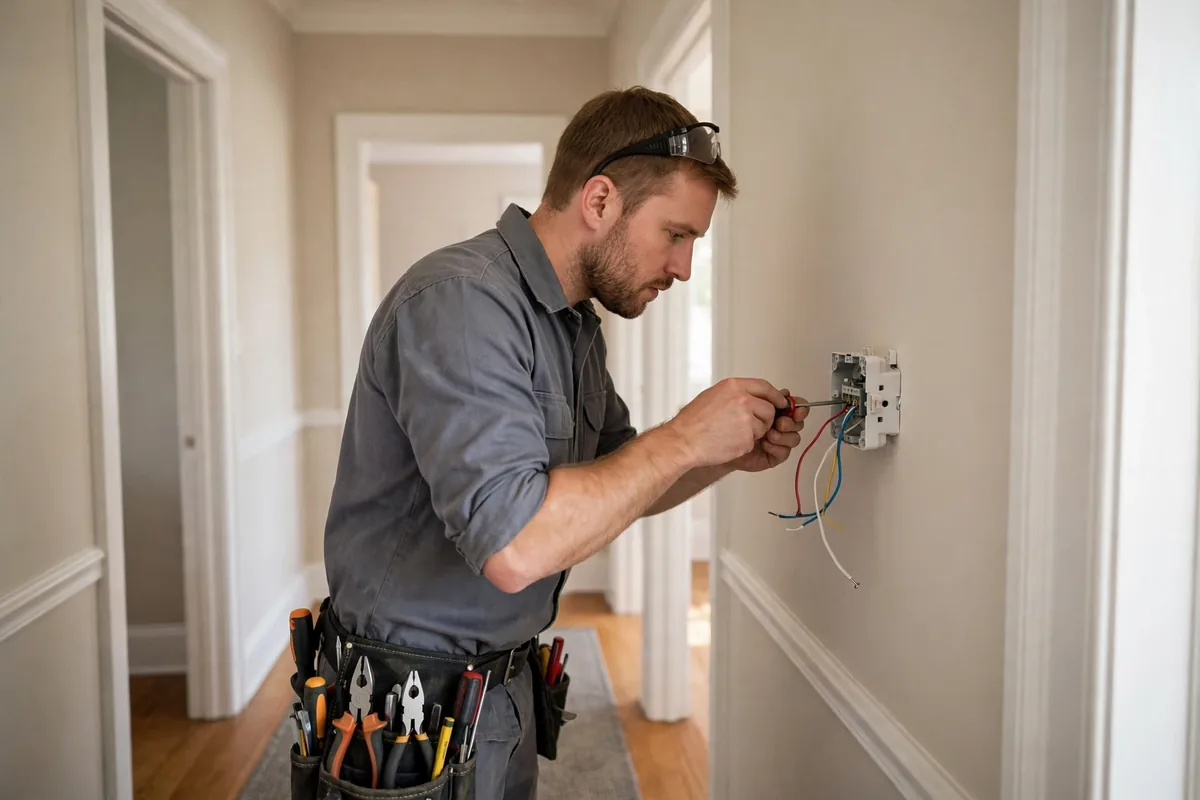
Wiring faults come next. A loose wire, a corroded terminal, or a wire nicked during decorating breaks the signal between control and furnace. The furnace may ignore the thermostat, run without stopping, or fail to start at all. Testing the signal at the furnace end separates a wiring fault from a control fault in a few minutes.
Testing
We start with a thermometer beside the thermostat. If the two disagree by more than a degree or two, the control is misreading, and calibration or relocation is the fix. Then we test the signal wires at the furnace: the call for heat should arrive cleanly and switch off cleanly when the setting is reached.
Settings get checked last. A fan left on continuous run, a schedule that fights the household routine, or a mode left on the wrong system type all mimic faults. Our furnace controls and zone heating page covers multi-zone controls, where one thermostat per zone adds its own wiring and calibration checks.
Thermostat reading wrong or furnace ignoring it? Call Frontier Heating.
Call (307) 309-8601Replacement
Most thermostat swaps are straightforward. Power off, old control off the wall, wires matched terminal by terminal to the new control, and a test cycle to confirm the furnace answers. The wall behind the old unit sometimes needs a small plate or patch, and the new control gets set to the furnace type it serves.
The choice of control follows the furnace and the household. A simple control suits a home where one temperature all day is the habit. A programmable control suits a household with a regular routine. What matters most is accuracy and a location that reads the house, not the wall it sits on.
Placement
A good spot is an inside wall in a room the household actually uses, away from sun, drafts, vents, and kitchen heat. That spot reads the house the way people feel it. A hallway that nobody sits in, a wall behind a door, or a spot above a radiator reads a different house from the one people live in.
If the only existing spot is a bad one, moving the control is worth discussing during a visit. The wiring run is usually short, and the improvement in comfort is immediate. The U.S. Department of Energy covers thermostat placement and settings in its energy saver material. See energy.gov energy saver guidance for that background.
A control above a vent or in direct sun reads its own spot, not your house. Call us.
Call (307) 309-8601Pairing
Not every thermostat complaint is a thermostat fault. A furnace that short-cycles from a clogged filter, a blower that never quite moves air, or a limit switch tripping on overheating can all look like a control that cannot make up its mind. We check the furnace side before blaming the wall, so a new control is never fitted over an unfixed furnace fault.
Our blower motor repair page and electric furnace services page cover two furnace-side causes that mimic control trouble. The rule is simple: test both ends of the signal before changing either one.
It measures its own spot, not the whole room. Sun on the control, a nearby vent, a draft, or a cold outside wall all skew the reading. A thermometer placed beside it shows the gap, and moving or recalibrating the control usually closes it.
It is worth checking. An old control can misread or fail to use the new furnace's features well. If it reads accurately and works with the new unit, it can stay. We test it during the visit and advise from what we find.
A stuck relay, a wiring fault, or a thermostat that never registers the set temperature can all keep the furnace running. Testing the signal at the furnace separates a control fault from a furnace fault, and each needs a different fix.
Yes. A control in a draft or above a vent reads rapid temperature swings and calls for heat in short bursts. Relocating or recalibrating it often ends the cycling. If the cycling continues after the control reads true, the cause is on the furnace side.
Zoned homes need controls that work with zone dampers and the zone panel, so the choice is narrower than for a single-zone home. Each zone gets its own control, and all of them must agree with the panel. We match controls to the zone system already in place.
A blank screen usually means lost power: dead batteries in a battery unit, a tripped breaker, or a blown fuse on the furnace control board. Check batteries and the breaker first, then call if the screen stays dark, since board fuses point at a wider electrical fault.
It is not recommended. The work involves low-voltage wiring, and a wrong connection can damage the furnace control board. A technician moves the control, tests the signal at both ends, and confirms the new spot reads the house accurately. The new spot is then tested against a thermometer before the visit ends.
Within a degree or two of a thermometer placed beside it is normal. A larger gap means misreading, and the furnace will heat to the wrong temperature. Calibration or relocation closes the gap, and the check takes only a few minutes.
It can help, mainly by holding a steadier temperature and following a schedule that matches the household routine. It cannot fix a furnace fault, a duct problem, or a badly placed control. Accuracy and placement matter more than features. A control that reads true saves more effort than any feature list.
Tell us what the thermostat reads, where it sits, and what the furnace does in reply. We check the reading, the signal, and the settings, then fix the end that is actually at fault.
Call (307) 309-8601