01
Emergency Furnace Repair
An Evanston emergency call after an I-80 snow starts with vent icing and ignition, since corridor storms block vents more than they break parts.
Railroad border town
Evanston sits on the Utah border at the west end of Interstate 80, a railroad town founded as a Union Pacific divisional point, with a historic downtown of brick buildings from the late 1800s and early 1900s. At about 6,749 feet, its furnaces face long winters, I-80 snow, and cold that rolls down from the Uinta Mountains.
The furnace pattern in Evanston follows the railroad history: older homes near downtown with basements and old ductwork, newer subdivisions on the edges, and many homes where a furnace installed decades ago still heats through sheer endurance. We check the furnace, the chimney or vent, and the ducts together, because an old home hides its trouble in all three.
Evanston corridor
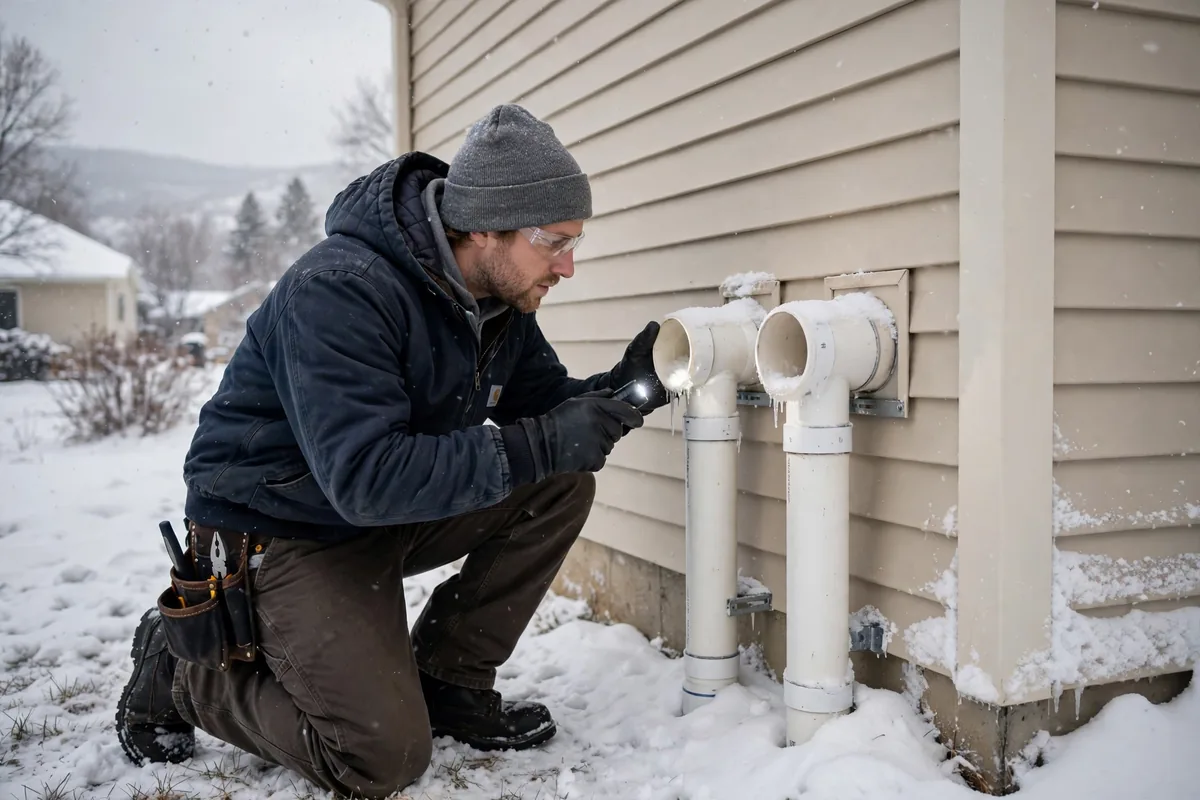
Evanston winter weather arrives on the I-80 corridor, with snow that drifts against houses and cold that settles in the Bear River valley. A furnace here faces two linked troubles: sidewall vents that ice over or drift shut, and older chimneys that draft poorly when cold air sits over town. Both can lock a furnace out or cause it to run unsafely, so venting is the first check on a winter Evanston call.
Border-town housing adds another pattern: homes near the railroad and downtown sit lower and more sheltered, while homes on the edges face open wind and colder nights. A furnace that keeps a sheltered downtown home warm can fall behind on an exposed edge lot, and we plan visits with that exposure in mind, checking air leaks and duct balance alongside the furnace itself.
Evanston landmarks
Evanston landmarks are easy anchors: the roundhouse and railyards on the west side, the historic train depot downtown, and the downtown historic district itself, with Bear River State Park nearby and Interstate 80 running through town toward Utah. Most homes sit between downtown and the town edges, and most furnace calls come from that band.
Those landmarks also mark housing age for us. Homes near the depot and the historic district tend to be the oldest, while homes toward the edges tend to be newer and more exposed. A landmark near your address helps us bring the right parts and the right checks to the visit.
Three Evanston landmarks anchor our visits: the roundhouse and railyards, the historic train depot downtown, and the downtown historic district. Most Evanston furnace calls fall near one of them.
Evanston furnace vent iced over? Call us and tell us what the outside pipes look like.
Call (307) 309-8601Evanston homes
Evanston housing runs from brick commercial buildings and nearby homes in the downtown historic district, built roughly between 1880 and 1930, to mid-century streets and newer subdivisions on the town edges. The historic homes often have basements, tall rooms, and ductwork added in stages, while newer homes are tighter but sit more exposed to wind and snow.
The railroad still shapes Evanston work, with rail yards and shops near town and many households tied to transportation and energy. Shift schedules matter here too, since a home that needs bedrooms warm in the morning after a night shift cannot rely on a standard daytime thermostat program. We set controls around the household schedule on Evanston visits.
Evanston seasons
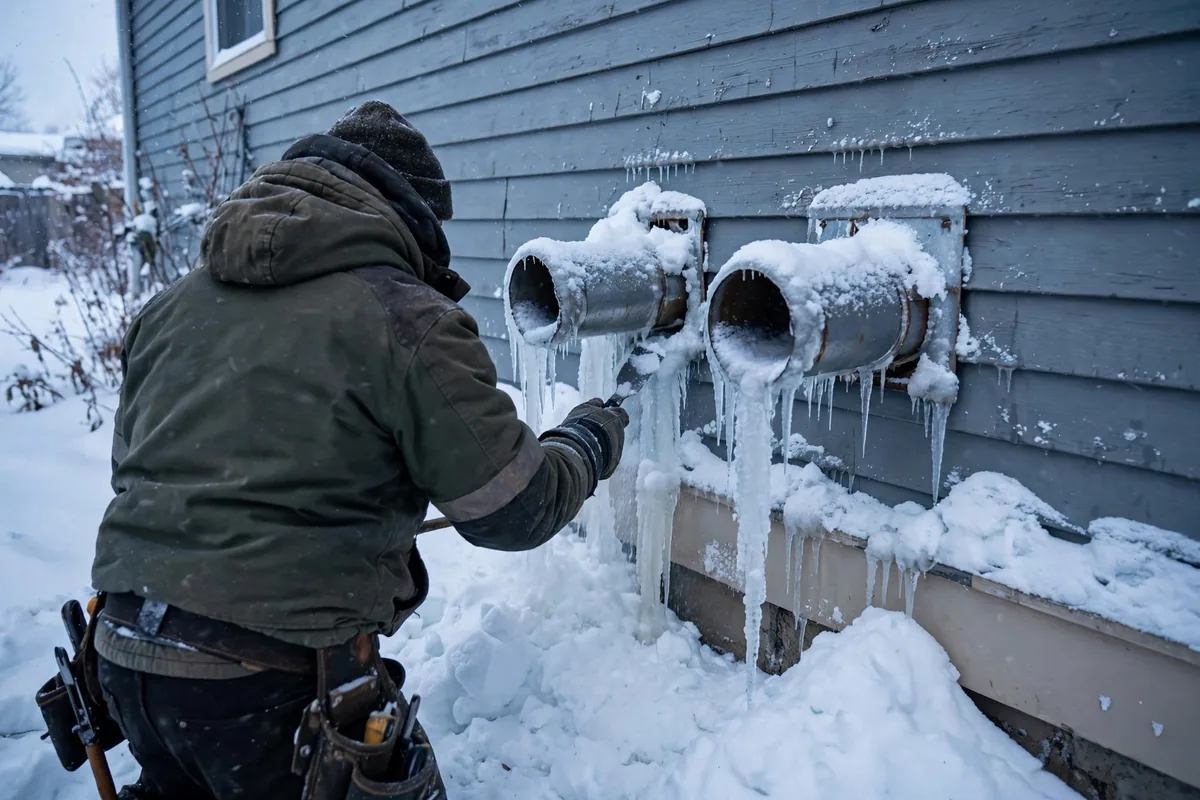
Evanston fall is the time to prepare, because the first I-80 snows can arrive early and a weak igniter or dirty flame sensor shows up on the first long run. A tune-up that cleans the burner, tests ignition, and checks venting can prevent the midwinter call when snow is deep and every heating company is busy.
Winter brings vent icing and drifting snow at their worst, and spring brings melt that matters for basement furnaces and ducts. Summer is the calm window for planned replacements. The United States Department of Energy home heating guidance at energy.gov covers filter care and furnace basics, and those same checks anchor our Evanston visits.
Evanston areas
Downtown Evanston and its historic district hold the oldest homes and the roundhouse area, while the north, south, east, and west edges hold newer streets and larger lots. The Bear River area and the corridors toward the Utah line mark the natural edges of town, and each area carries a different furnace story, from old chimneys downtown to newer sidewall vents on the edges.
Formal named subdivisions are few in Evanston, so we describe areas by direction and landmark rather than inventing names. When you call, tell us the nearest landmark and the house age, and we will know whether to expect an old chimney, a long duct run, or a newer vented system.
We serve Evanston across Uinta County, including these areas. Formal named subdivisions are few here, so areas are described by direction and landmark.
Downtown Evanston Historic DistrictNorth EvanstonSouth EvanstonEast EvanstonWest EvanstonBear River areaRoundhouse area
Evanston ZIP codes we cover: 82930, 82931.
Furnace help
Evanston needs railroad-town furnace work, and each line below is written for this border town.
01
An Evanston emergency call after an I-80 snow starts with vent icing and ignition, since corridor storms block vents more than they break parts.
02
Installing a furnace in an Evanston historic home means matching ducts to tall rooms and old runs, not just swapping the cabinet.
03
When an Evanston furnace fails every winter, replacement matched to the house and its ducts ends the yearly patch cycle.
04
An Evanston tune-up in fall cleans burners and sensors and checks venting before the corridor snows arrive.
05
Gas furnaces heat most of Evanston, and corridor wind plus vent icing make combustion and draft checks the top priorities.
06
Evanston apartment electric furnaces heat one or two rooms each, and a dead sequencer there leaves the unit blowing cold air that tenants mistake for a broken heater.
07
Homes outside Evanston on propane face border-town cold and long supply runs, so tank and regulator health get checked first on rural calls.
08
Evanston border-town blowers fight corridor dust that cakes the wheel, and a blower cleaned each fall moves noticeably more air than one left dusty for years.
09
Heat exchanger trouble in Evanston often follows years of old-chimney drafting trouble, so soot or odd flames prompt a careful exchanger look.
10
An Evanston thermostat mounted on a wall shared with a warm chimney chase reads high all winter, and moving it six feet can fix a house that never warms evenly.
11
Evanston historic duct runs were added room by room as the railroad town grew, and the oldest runs are often undersized for the rooms they now serve.
12
An Evanston safety inspection centers on chimneys and sidewall vents, since corridor snow and cold can stall a draft that worked in summer.
13
Evanston manufactured homes near the rail yards often have furnaces tucked into tight closets, and we check closet airflow first, since a starved furnace overheats fast.
14
Evanston rail-yard offices and border-town motels need heat that recovers fast after doors open all day, and we set their controls for heavy foot traffic.
15
Zone controls help an Evanston home with a cold windward side and a warm sheltered side, by sending heat where the corridor wind steals it.
Local answers
Sidewall vent pipes on high-efficiency furnaces can ice over in Evanston cold, and drifting snow can seal them shut. A blocked vent trips a safety switch and locks the furnace out. Clearing ice and snow gently from the pipes sometimes restores heat, but repeated icing points to vent placement or drainage trouble that a technician should check.
Yes. Historic homes often have tall rooms, old ductwork, and chimneys that need draft checks, so a visit should look at the whole system. Duct leaks and unbalanced runs are common, and a chimney that drafts poorly in cold valley air can cause lockouts. A technician familiar with older homes checks furnace, ducts, and venting together.
A furnace can run steadily yet fail to warm a house if ducts leak, filters clog, or returns cannot pull enough air back. In Evanston, wind and cold add heat loss on top of those problems. We check filter, airflow at each register, and duct condition before recommending any part, since delivery trouble is more common than a weak furnace.
Check the thermostat setting, the filter condition, and whether snow or ice blocks the outside vent pipes, and note whether the furnace tries to start or stays silent. Those four observations help us diagnose faster. Do not open the furnace cabinet or handle gas parts yourself, and call promptly if you smell gas or see soot.
Early fall is best, before the first I-80 snows and before the busy winter season. A fall tune-up cleans the burner and flame sensor, tests ignition, and checks venting, which prevents most midwinter failures. Waiting until the first cold snap risks a no-heat call when scheduling is hardest.
Yes. An oversized furnace short-cycles, starting and stopping in quick bursts, which wears parts, leaves rooms uneven, and wastes energy. Historic Evanston homes with tall rooms and old ducts are especially sensitive to sizing. A proper visit measures the house and its ducts before recommending a unit size.
Tell us your area of Evanston, what the outside vents look like, and what the furnace is doing. We will talk through the safe checks and book a visit.
Call (307) 309-8601 Contact Frontier Heating