Thermostat Services
The wall control that tells the furnace when to run and when to rest.
Rooms, their own heat
Zone heating lets different parts of a home hold different temperatures from one furnace: bedrooms cooler at night, living rooms warm in the evening, and unused rooms kept at a low background heat. It works through dampers in the ducts, a zone panel, and a thermostat per zone. This page explains how zoning works, when it helps, and what goes wrong with it.
How it works
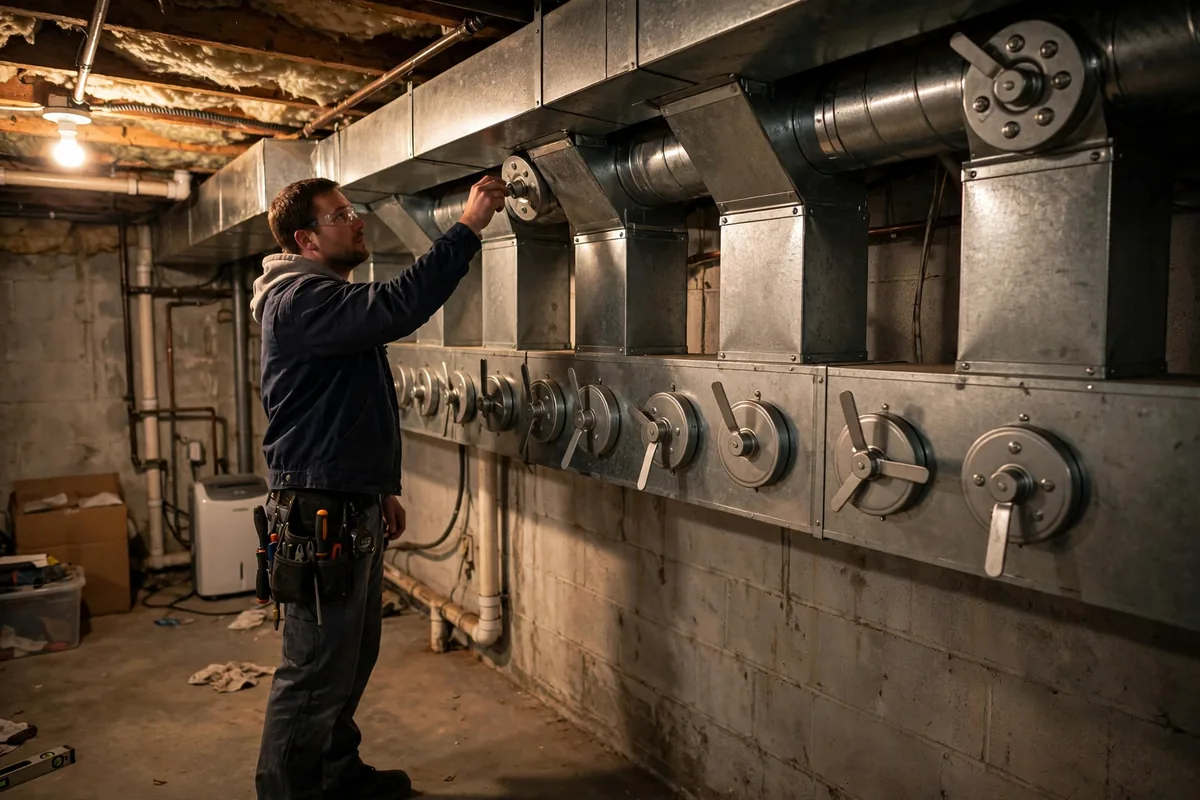
Each zone gets a thermostat and a motorized damper in its duct run. When a zone calls for heat, its damper opens and the furnace runs; when the zone reaches temperature, its damper closes. The zone panel coordinates the calls, so the furnace never runs against fully closed ducts, and a bypass or dump zone protects airflow when only a small zone is calling.
That coordination is the whole trick. A zone system without a working panel is just a set of dampers fighting the blower, which overheats the furnace and starves the zones. The panel, the dampers, and the thermostats must agree, and diagnosis starts with which one disagrees. Our thermostat services page covers the wall controls, which are the most common point of disagreement.
When it helps
Zoning helps homes with genuinely different needs by area: a sunny south wing and a shaded north wing, a main floor and a basement used at different hours, or a home where bedrooms sit empty all day. Those homes waste heat holding every room at one temperature, and zoning lets each area follow its own routine.
It helps less in small open-plan homes, where air mixes easily between zones and dampers cannot hold a difference. It also helps less where the duct layout cannot be divided cleanly, since a zone needs its own duct run to control. We say so when zoning is proposed for a home that will not benefit, rather than fitting a system that cannot do what it promises.
One zone cold while others roast? Call Frontier Heating about your zone panel.
Call (307) 309-8601Faults
A zone that never heats usually has a stuck damper, a failed damper motor, or a thermostat that never calls. A zone that never stops heating usually has a damper stuck open or a panel relay welded shut. Testing each damper by hand, then each thermostat signal at the panel, separates those causes in turn.
Furnace-side faults mimic zone faults too. A weak blower or a clogged filter starves all zones, and the smallest zone suffers first, which looks like a zone fault. Our blower motor repair page and ductwork and airflow services page cover that side. The rule holds: test the furnace, then the panel, then the zone.
Controls
The zone panel is the brain, and it needs a clean power supply, tight wiring, and settings matched to the furnace: how many zones, which is the dump zone, and how the panel handles a single-zone call. A panel set for the wrong furnace type short-cycles the unit or leaves zones waiting.
Sensors matter where they exist: a discharge air sensor that guards against overheating when only a small zone calls. If that sensor fails, the panel may refuse calls it should accept, and the house cools for no visible reason. The U.S. Department of Energy covers controls and zoning concepts in its energy saver material. See energy.gov energy saver guidance for that background.

Thinking about zoning? Call us to check whether your ducts can be divided cleanly.
Call (307) 309-8601Living with zones
Set zones by routine, not by gadget enthusiasm. Bedrooms a little cooler overnight, living areas warm when they are used, and unused rooms at a low background setting is a pattern most households settle into quickly. Extreme differences between neighboring zones fight each other through shared walls and open doors, so modest gaps work better than dramatic ones.
A yearly maintenance and tune-up visit should include a zone check: dampers moving freely, thermostats reading true, and the panel answering each call. Zones drift out of agreement slowly, and the yearly check catches a stuck damper before it becomes a cold room in January.
Zone heating divides a home into areas, each with its own thermostat and a motorized damper in its duct run, all coordinated by a zone panel. Each zone calls for heat independently, so bedrooms, living areas, and unused rooms can hold different temperatures from one furnace.
Often, yes, when the duct layout can be divided into zones and the furnace can handle single-zone calls without overheating. A bypass or dump zone protects airflow when only a small zone calls. Homes with open-plan layouts or undividable ducts benefit less.
Usually a stuck damper, a failed damper motor, or a thermostat that never calls for heat. Furnace-side faults such as a weak blower can also starve the smallest zone first. Testing damper, thermostat signal, and panel in turn finds the cause.
Yes. Each zone needs its own control so it can call for heat independently. The zone panel coordinates those calls, and a missing or faulty control leaves its zone without a voice in the system. The panel cannot heat a zone it never hears from.
A bypass damper relieves excess air pressure when only a small zone is calling for heat, so the furnace does not overheat against nearly closed ducts. It is part of a properly designed zone system, not an optional extra. Without one, the furnace overheats whenever only a small zone calls.
Yes, within reason. Neighboring zones share walls and air, so modest differences hold well while extreme gaps fight each other. Bedrooms cooler overnight and living areas warm in the evening is the pattern most homes settle into. Shared walls and open doors limit how far apart neighboring zones can sit.
Short cycling in a zoned home often means the panel settings do not match the furnace, the dump zone is wrong, or only a tiny zone is calling. The panel, sensor, and damper settings are checked together, since they act as one system.
Yes. Dampers stick with dust and age, and a stuck damper silently leaves a zone cold or hot. A yearly check moves each damper, tests each thermostat, and confirms the panel answers every call. Catching a sticking damper early keeps a zone from going cold in January.
Usually not for a small open-plan home, where air mixes easily and dampers cannot hold a difference. Zoning earns its keep in larger homes with distinct wings, floors, or routines. We advise against it where the layout cannot support it.
Tell us which zones misbehave and what the panel does when they call. We test dampers, thermostats, and panel in turn, so the end that disagrees gets found.
Call (307) 309-8601