Gas Furnace Services
Burners, valves, and vents on gas-fired furnaces, checked and repaired.
The core, checked
The heat exchanger is the metal core inside a gas or propane furnace that carries heat from flame to air without letting combustion gases mix with the air you breathe. A crack in it is the most serious furnace fault there is, because it can let carbon monoxide into the home. This page explains what the exchanger does, how it is inspected, and what happens when it fails.
Its job
Burners heat the outside of the exchanger, and the blower pushes household air across its inside surfaces. Heat passes through the metal, while combustion gases stay on their own side and leave through the vent. That separation is the whole safety design of a fuel-fired furnace, and it depends on the metal staying intact through thousands of heat cycles.
Over years, the metal expands and contracts with every cycle, and soot, rust, and overheating wear it thin. A clogged filter that overheats the furnace speeds the wear, as does a furnace that short-cycles for years. The exchanger does not fail loudly. It cracks quietly, which is why inspection matters more than listening for a symptom.
Inspection
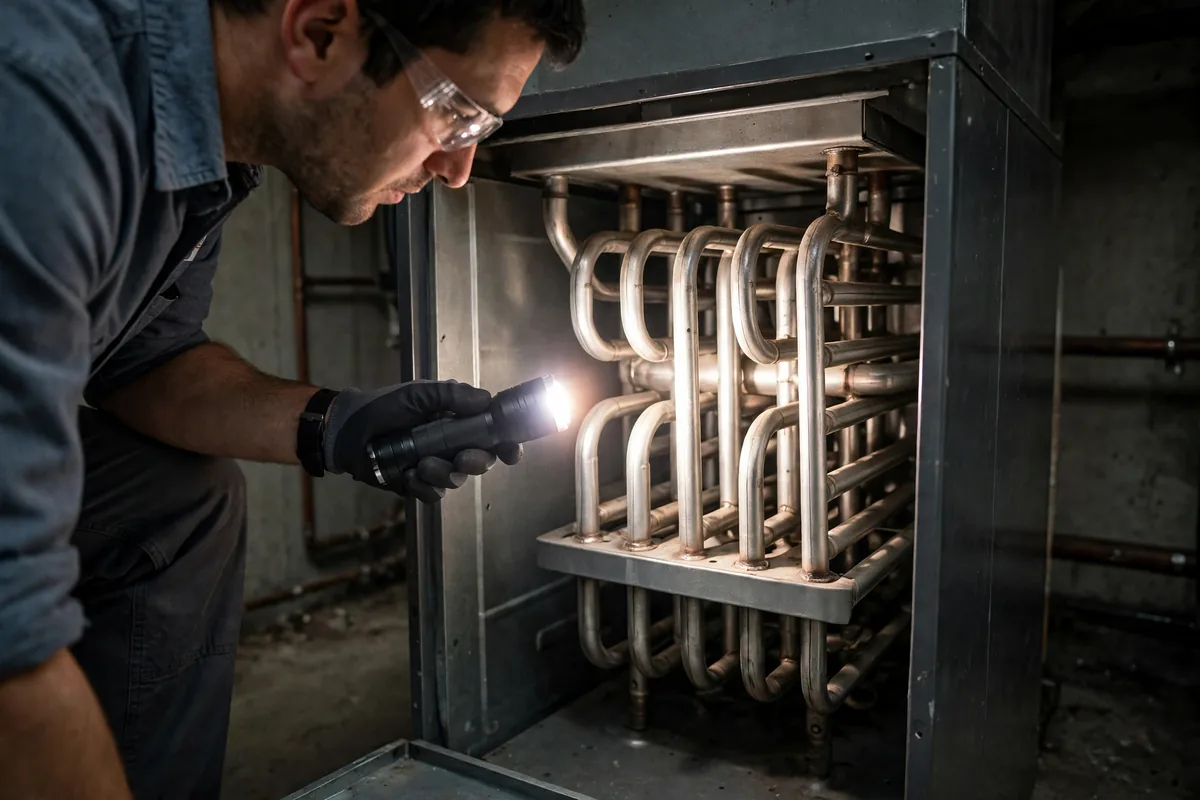
Inspection starts with eyes and light: the exchanger surfaces are viewed closely with a bright lamp, looking for cracks, rust lines, and soot patterns that mark a breach. Where the view is limited, a camera or a flame test helps. A flame that wavers or changes color when the blower starts can signal air leaking through a crack into the combustion side.
Carbon monoxide readings around the furnace and at vents add another check. No single test is perfect on its own, which is why a careful inspection uses several together. Our furnace safety inspection includes this exchanger check, and our gas furnace services page covers burner-side signs that point the same way.
Worried about your heat exchanger? Call Frontier Heating for a close inspection.
Call (307) 309-8601If it cracks
There is no patch and no temporary fix for a cracked heat exchanger. The furnace is shut down, because running it risks carbon monoxide entering the home. We explain what we found, show the evidence where it can be shown safely, and talk through the next step, which is usually a replacement furnace, since exchangers are rarely worth swapping alone in an older unit.
That conversation is never rushed. A home without heat in winter needs a plan for the night as well as for the replacement, and we talk through both. The U.S. Environmental Protection Agency explains carbon monoxide risks and alarm placement in its indoor air material. See EPA indoor air quality guidance for that background.
Warning signs
Soot around the burner, a flame that changes when the blower starts, a carbon monoxide alarm sounding, or a persistent odd smell near the furnace all deserve a prompt inspection. Headaches or nausea that ease when you leave the house are a reason to leave at once and call for help from outside, not a reason to wait for a routine visit.
Age and history matter too. A furnace that has overheated repeatedly from clogged filters, or one that has short-cycled for years, has lived a harder life. A yearly maintenance and tune-up visit includes an exchanger look, which is how most cracks are found before an alarm ever sounds.
Carbon monoxide alarm sounding? Leave the house and call for help from outside.
Call (307) 309-8601Protection
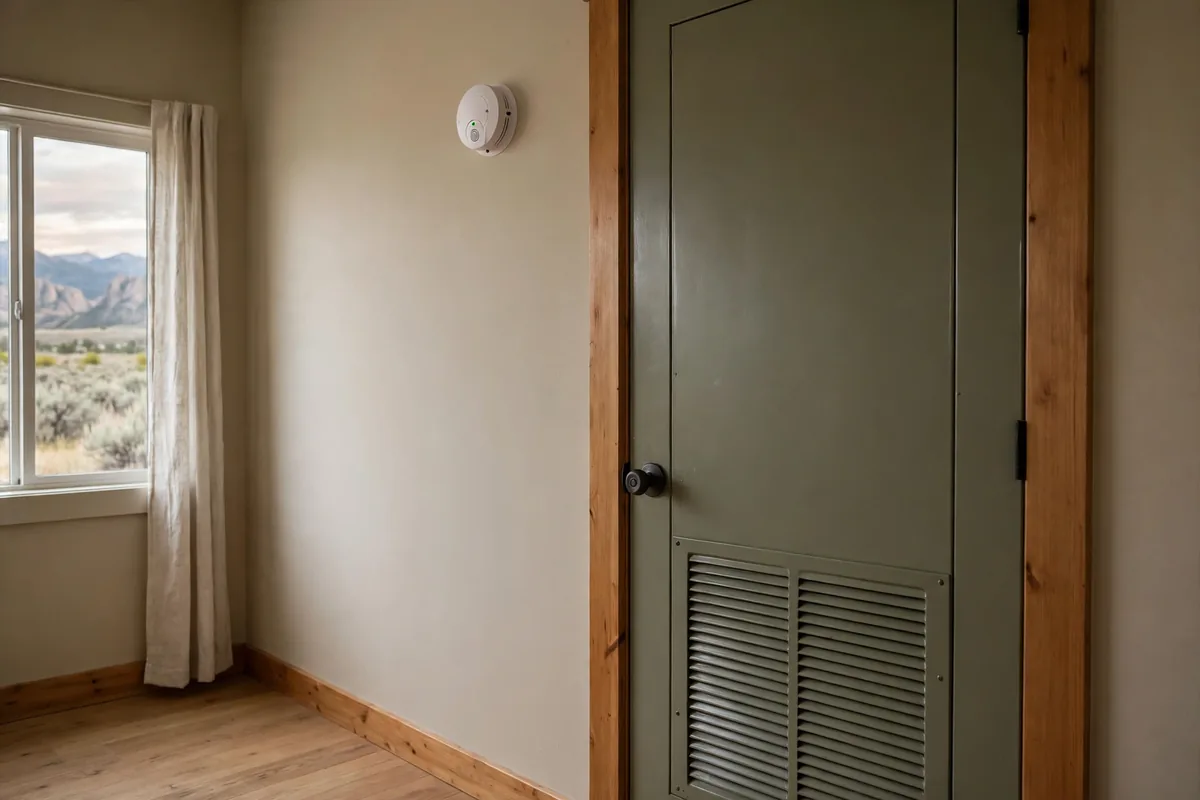
Carbon monoxide alarms near sleeping areas and near the furnace room are the household safety net. Test them monthly, replace batteries as needed, and replace the alarm itself at the end of its working life. An alarm is not a substitute for inspection, but it is the warning that catches what inspection has not yet seen.
Between visits, keep filters clean and vents clear, and never block the furnace room with storage. Overheating from a clogged filter is one of the few exchanger risks a homeowner can directly control, and it costs nothing but attention. If an alarm sounds, leave the house and call from outside.
It is the metal core inside a fuel-fired furnace that transfers heat from the burner flame to the air blown through the house, while keeping combustion gases separate from breathing air. Burners heat its outside, household air passes its inside, and the gases leave through the vent.
You usually cannot tell by looking at the furnace from outside. Signs include soot near the burner, a flame that wavers when the blower starts, and a carbon monoxide alarm sounding. A technician inspects the exchanger surfaces with light and tests for carbon monoxide to confirm.
No, not safely. A cracked exchanger means the furnace is shut down, since combustion gases can reach household air through the crack. The usual next step is a replacement furnace, and the household gets a plan for heat in the meantime.
Once a year, during a maintenance or safety visit. The metal wears with heat cycles, and yearly inspection catches cracks early. Older furnaces and ones that have overheated deserve that yearly look without exception. Most inspections find a sound exchanger, and that result is worth having on record.
No. Electric furnaces heat air directly with elements, so there is no combustion side and no exchanger. Heat exchanger services apply to gas and propane furnaces, where flame and breathing air must stay separated. Their heat comes from elements, so exchanger inspection simply does not apply to them.
Repeated heating and cooling stresses the metal, and overheating from clogged filters or poor airflow speeds the wear. Rust and soot add their own damage over time. A furnace that short-cycles for years also ages its exchanger faster. A furnace that runs steadily, with clean filters and clear vents, ages its exchanger more slowly.
Often, yes, which is why alarms matter. But an alarm is a last warning, not a test. A crack can exist before an alarm sounds, and alarms themselves age. Yearly inspection plus working alarms together give the household real protection.
It is uncommon in well-maintained furnaces and more likely in older units or ones that have overheated repeatedly. Rarity is no comfort if it happens in your home, which is why the yearly inspection exists. Most inspections find a sound exchanger, and that result is worth having.
The furnace is opened and the exchanger surfaces are viewed with a bright light, looking for cracks, rust, and soot marks. Flame behavior when the blower starts is watched, and carbon monoxide readings are taken. Findings are explained in plain words before any decision is made.
Tell us the age of the furnace, whether any alarm has sounded, and what the flame does when the blower starts. We inspect the exchanger surfaces closely and test for carbon monoxide.
Call (307) 309-8601