01
Emergency Furnace Repair
A Cody emergency call on a windy basin night starts with ignition and airflow, since wind exposes weak parts that calm days hide.
Yellowstone gateway heat
Cody sits in the Bighorn Basin below the Absaroka Range, the gateway town to Yellowstone's east entrance, where tourism, ranching, and outfitting shape the streets. Homes here mix downtown houses, tourist cabins, and newer subdivisions, and furnaces face basin wind that can howl for days and cold snaps that arrive with little warning.
The furnace pattern in Cody follows the wind: a house that heats fine on a calm day loses ground when basin wind drives cold air through gaps and cools the windward side, while tourist cabins that sit empty between guests can hide a failure until pipes are at risk. We check wind exposure, venting, and freeze risk on every Cody visit.
Cody seasons
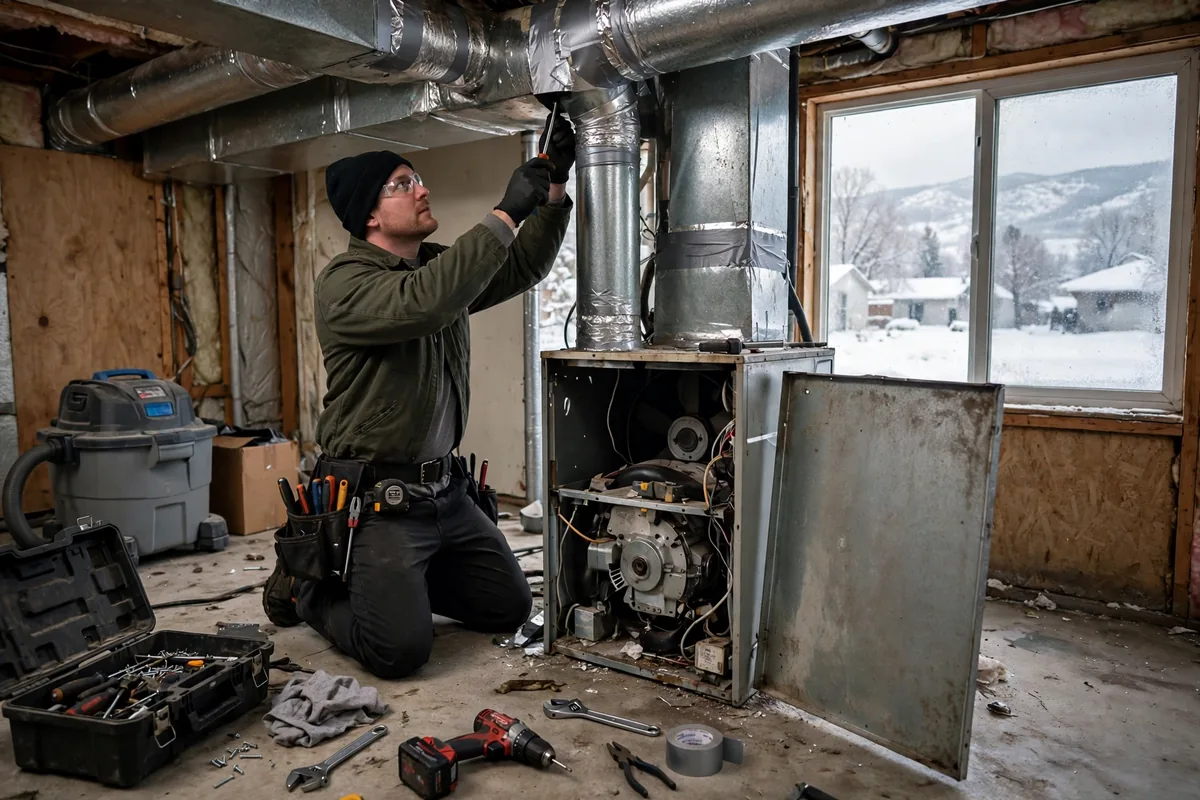
Cody fall is the time to prepare, because basin wind and the first cold snaps arrive while tourist season winds down, and a weak igniter or dirty flame sensor shows up on the first long run. A tune-up that cleans the burner, tests ignition, and checks venting can prevent the midwinter call when wind is howling and every heating company is busy.
Winter brings basin wind at its worst, and spring brings melt and mud that matter for basement furnaces. Summer is the calm window for planned replacements and for setting up freeze protection in cabins. The EPA indoor air guidance at epa.gov explains why clean filters and sound venting matter for indoor air, and we check both on every Cody visit.
Cody basin
Cody basin wind is the local furnace problem. Open country and the Shoshone River valley funnel wind through town, driving cold air into houses through gaps and cooling windward rooms far faster than sheltered rooms. A furnace that keeps up on a calm night can fall behind when the wind picks up after dark, and a thermostat in a warm hallway may never register how cold the windward rooms have become.
Chinook winds add a Cody twist, with rapid warm-ups that swing indoor temperatures and expose thermostats that read a sunny wall instead of the living space. A home that overheats during a chinook and then cools fast when the wind shifts back to cold needs controls and duct balance checked together, not just a furnace part.
Cody furnace losing to basin wind? Call us and tell us which side of the house is cold.
Call (307) 309-8601Cody homes
Cody housing mixes downtown homes near the museum district, tourist cabins and guest houses that sit empty for stretches, and newer subdivisions on the basin floor. The downtown homes often have older furnaces and long duct runs, cabins have compact systems and freeze risk when vacant, and newer homes sit on open, windy lots where one side loses heat fast.
Tourism shapes Cody heating schedules, with guest cabins that need reliable heat for visitors and employee housing that needs steady warmth on modest budgets. A cabin furnace needs safety controls and freeze protection checked as carefully as its heating output, since a guest call about a cold cabin is also a call about a house at risk.
Cody areas
Downtown Cody holds the oldest homes and the museum district, the South Fork side follows the river valley with cabins and rural homes, and the east, west, and north sides spread across the basin floor with newer streets. Buffalo Bill Village and the airport area mark the visitor side of town, while Ralston and the road toward Powell mark the rural side.
Each area faces different wind and cold. Downtown homes sit more sheltered, South Fork homes sit in a valley with pooled cold, and basin-floor homes face open wind. When you call, tell us the area and whether the home is occupied, since a vacant cabin furnace gets a freeze-risk check first.
We serve Cody and nearby Park County communities, including these areas.
Downtown CodyEast CodyWest CodyNorth CodySouth Fork areaBuffalo Bill Village areaCody Airport areaRalston
Cody ZIP codes we cover: 82414.
Cody landmarks
Cody landmarks are easy anchors: the Buffalo Bill Center of the West downtown, the Cody Stampede rodeo grounds nearby, and the Shoshone River running through town, with Heart Mountain rising to the north and Yellowstone to the west. Most homes sit between downtown and the basin roads, and most furnace calls come from that area.
Those landmarks help us place a home quickly. Downtown homes tend to be older, South Fork homes tend to be cabins and rural houses, and basin subdivisions tend to be newer and windier. A landmark near your address gives us a useful head start on the visit.
Three Cody landmarks anchor our visits: the Buffalo Bill Center of the West downtown, the Cody Stampede rodeo grounds, and the Shoshone River. Most Cody furnace calls fall near one of them.
Furnace help
Cody needs basin-wind furnace work for town homes, cabins, and subdivisions. Each line below is written for this gateway town.
01
A Cody emergency call on a windy basin night starts with ignition and airflow, since wind exposes weak parts that calm days hide.
02
Installing a furnace in a Cody cabin means planning heat for tall rooms and vacant stretches, with freeze protection built into the setup.
03
Cody cabin furnaces that quit each windy season often have venting placed where drifts pile, and replacement with a relocated vent solves the repeat failure.
04
A Cody tune-up in fall cleans burners and sensors and checks venting before basin wind and cold arrive together.
05
Gas furnaces heat most of Cody, and basin wind makes venting checks and long run hours the top priorities on them.
06
Cody guest-cabin electric furnaces sit idle between bookings, and a corroded contact after a damp summer can leave the first guests of fall without heat.
07
Cody basin propane homes on large lots can run low without warning during a long windy stretch, and a tank gauge check belongs on every fall visit.
08
Cody basin wind pushes against blower output on the windward side, and a blower that sounds strained on windy nights may be fighting duct leaks, not failing on its own.
09
A cracked exchanger in a Cody cabin can send combustion gases where they do not belong, so we shut the unit down and inspect the cells with a camera before anyone sleeps in the house again.
10
A thermostat on a sunny Cody wall misreads the house during chinook warm-ups, so we check placement on homes with swinging temperatures.
11
Cody windward duct runs in attics lose heat to basin wind through thin insulation, and wrapping those runs warms the far bedrooms more than any thermostat change.
12
A Cody safety inspection centers on venting, since basin wind can stall a draft or drive snow against a sidewall pipe.
13
Cody cabins on manufactured frames use short duct runs under the floor, and when one end goes cold we look for a crushed or disconnected section beneath the home.
14
Cody lodges heat guest rooms that empty and fill with the tourist seasons, so their commercial systems need setback routines that protect pipes between bookings.
15
Zone controls help a Cody home with a cold windward side and a warm sheltered side, by sending heat where the basin wind steals it.
Local answers
Basin wind drives cold air through gaps and cools windward rooms far faster than sheltered rooms, forcing the furnace into long runs. Air sealing around windows, doors, and attic hatches helps as much as any furnace part, and a blower that runs constantly on windy days may be fighting leaks rather than failing on its own.
An empty cabin with a failed furnace can freeze pipes before anyone notices, so cabins need a fall safety check, a steady thermostat setting, and someone local to check that heat is running during cold stretches. If you arrive to a cold cabin, check for frozen pipes and blocked vents before forcing the furnace repeatedly, and call us.
Chinook winds warm the air fast, and a thermostat on a sunny wall can call for less heat while the rest of the house still needs it, or the reverse as the wind shifts. Thermostat placement and duct balance matter in chinook country, and a control that reads a sunny wall will mislead the furnace through every warm-up.
Yes. Basin wind can stall a chimney draft or drive snow against sidewall vents, causing lockouts or unsafe venting. A furnace that locks out on windy days, or one that smells odd when the wind picks up, needs a venting check that accounts for wind direction and nearby buildings, not just a part swap.
Early fall is best, before basin wind and cold arrive and before the busy winter season. A fall tune-up cleans the burner and flame sensor, tests ignition, and checks venting, which prevents most midwinter failures. Waiting until the first windy cold snap risks a no-heat call when scheduling is hardest.
When a Cody furnace fires, shuts off, and fires again within minutes, the usual causes are a dirty filter, a blocked return, or a furnace too large for the cabin or house. Each short burst wears the igniter and leaves rooms half-warmed, and the pattern gets worse on windy nights when the thermostat calls more often. A visit that checks airflow first usually finds the cause without replacing parts.
Tell us your area, whether the home is occupied, and which side of the house is cold. We will talk through the safe checks and book a visit.
Call (307) 309-8601 Contact Frontier Heating