Thermostat Services
The wall control that tells the furnace when to run and when to rest.
Electric heat, kept running
Electric furnaces heat with elements and sequencers instead of flame, which makes them quiet, simple, and well suited to homes without a gas line. They still fail, usually in the electrical parts: elements that burn out, sequencers that stick, and wiring that loosens with heat cycles. This page explains how electric furnaces work, how they fail, and how we fix them.
How they work
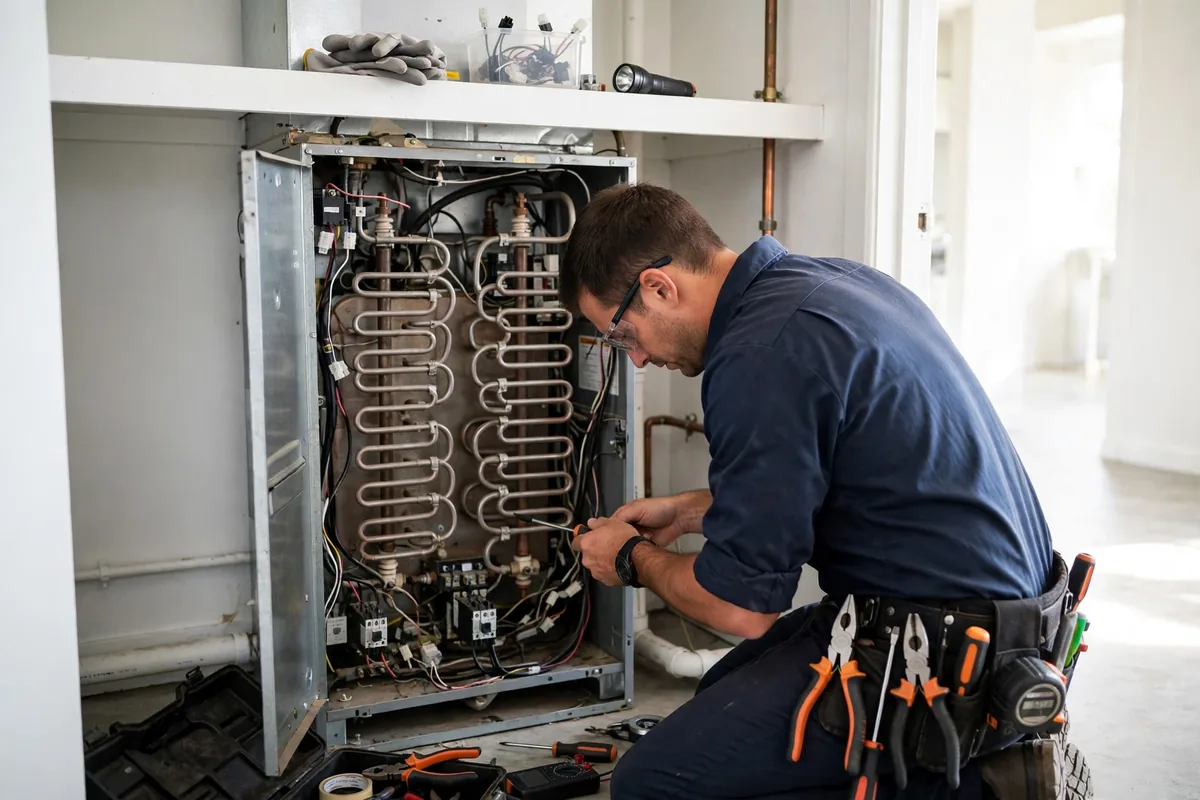
An electric furnace heats air by passing it over electric elements, much like the coils in a toaster, only larger and ducted through the house. A sequencer switches the elements on in stages, so the furnace warms up gradually instead of drawing full power in one surge. The blower then pushes the warmed air through the ducts, and the thermostat tells the sequencer when to step up or step down.
Because there is no flame, there is no venting of combustion gases and no gas valve to fail. That simplicity is the main appeal, and it also narrows the fault list. When an electric furnace underheats, the cause is usually electrical: a dead element, a stuck sequencer, a failed relay, or a breaker that trips under load. Each has a meter test that proves it, so diagnosis is direct.
Faults
A burned-out element is the most common cause of weak heat. The furnace runs, the blower blows, but only some elements glow, so the air never gets fully warm. The house heats slowly, the furnace runs longer, and rooms far from the unit stay cool. Testing each element with a meter shows which one has failed, and replacing it restores full heat.
A stuck sequencer causes a different pattern: heat that will not turn off, or elements that never all come on. Relays that chatter or weld shut, and wiring that has loosened at a hot terminal, round out the usual list. Our thermostat services page covers the control side, since a misreading thermostat can mimic an element fault by calling for heat at the wrong times.
Electric furnace blowing lukewarm air? Call Frontier Heating and tell us the pattern.
Call (307) 309-8601Diagnosis
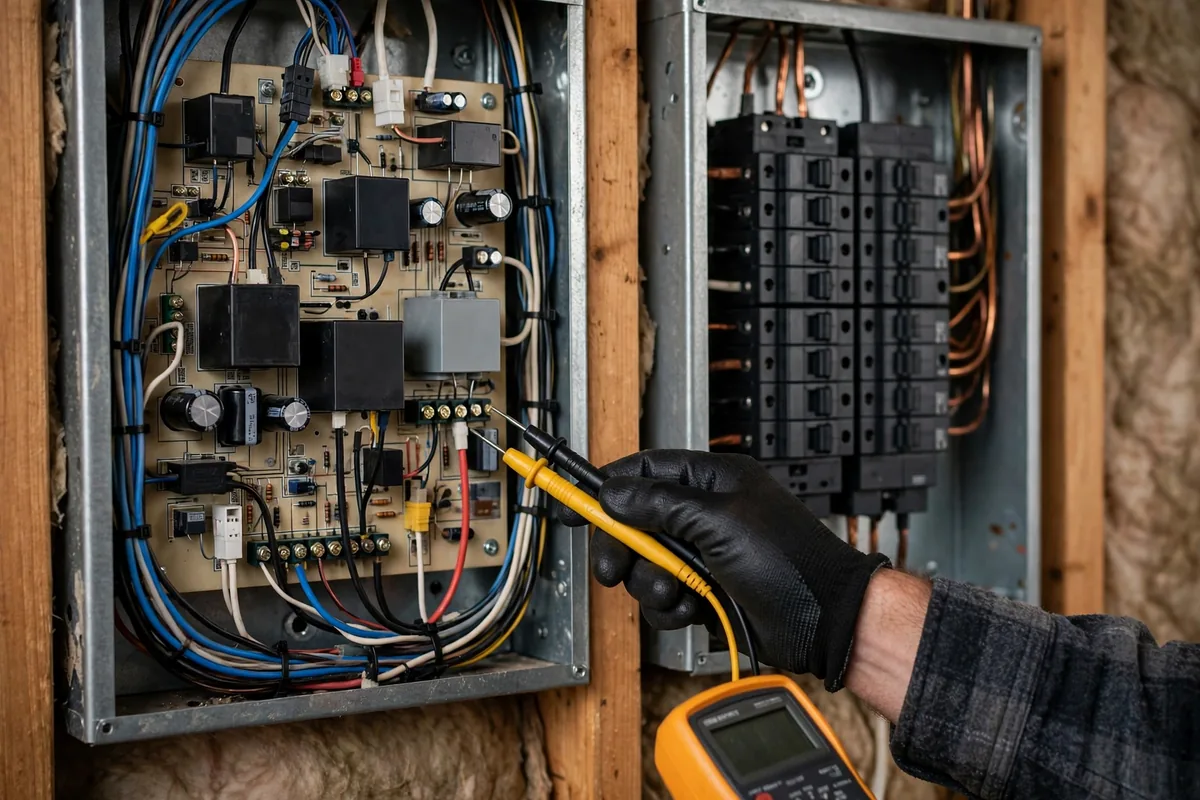
We test before we swap. Power off, panels open, and each element, sequencer contact, and relay gets a meter reading against what it should show. A good element reads a steady resistance, a failed one reads open, and a sequencer that never closes its contacts has announced itself. That order keeps the repair to the part that actually failed.
We also check the breaker panel and the wiring feeding the furnace. Electric furnaces draw heavy current, and a loose lug or an undersized breaker shows up as tripping, heat at the panel, or a furnace that cuts out under load. The U.S. Department of Energy describes electric heating equipment in its energy saver material, which is a useful background read. See energy.gov energy saver guidance for the basics.
Suitability
Electric heat suits homes without a gas line and with electrical capacity to spare: smaller homes, well-insulated homes, and homes where the furnace is a backup to another heat source. It also suits landlords and cabins where simplicity matters, since there is no fuel delivery to arrange and no vent to clear of snow.
Larger or draftier homes in deep cold may find electric heat runs long hours, and a gas or propane unit may suit them better. Our gas furnace services page and propane furnace services page describe those options. The choice follows the house and its wiring, not a preference for one fuel over another.
A breaker that keeps tripping on the furnace circuit needs a look. Call us.
Call (307) 309-8601Care
Filters matter as much for electric furnaces as for any other kind. A clogged filter overheats elements, trips limit switches, and shortens element life. Change it monthly through winter, keep vents open, and keep the furnace closet clear so air reaches the unit and a technician can reach the panels.
A yearly maintenance and tune-up visit checks elements, sequencers, relays, and wiring, and catches the loose terminal before it becomes a tripped breaker on a cold night. If the furnace starts blowing lukewarm air or trips its breaker repeatedly, call rather than resetting the breaker again and again, since repeated trips point at a fault that needs finding.
Usually one or more heating elements have failed, so the air passes over fewer hot coils than it should. A stuck sequencer can cause the same symptom by never switching all elements on. Meter tests on each element and sequencer contact identify the failed part directly.
No. Electric furnaces produce no combustion gases, so they need no flue or vent to the outside. They still need airflow: a clear return path, open vents, and a clean filter, since restricted air overheats the elements and trips the limit switch.
Yes, when it is sized to the home and the electrical supply can carry it. Smaller and well-insulated homes suit electric heat best. Larger homes in deep cold may run long hours, in which case a gas or propane furnace may be the better fit.
A sequencer switches heating elements on in stages instead of all at once. That staged start avoids a sudden heavy draw and lets the furnace warm up smoothly. When a sequencer sticks, some elements never switch on, or heat stays on after the thermostat stops calling.
Repeated tripping usually means a fault: a shorted element, a failing relay, or a loose connection heating up under load. Resetting the breaker without finding the cause risks damage to wiring. Call for a check, and note whether the trip happens at start-up or after the furnace has run a while.
They avoid gas leaks and combustion gases, which removes two risks. They still carry electrical risks: heavy current, hot elements, and wiring that loosens with heat cycles. A yearly check of elements, sequencers, and wiring keeps those risks in check.
It varies with use, dust, and airflow. Elements that run in a clean, well-filtered furnace last longer than ones starved of air by a clogged filter. When one fails, the rest are tested too, since they share the same working conditions.
It is not recommended. The work involves heavy current, high-voltage wiring, and testing with a meter, and a wrong connection can damage the furnace or injure the person doing it. A technician tests the whole circuit, not just the element, before closing the panels.
Yes. Elements, sequencers, relays, and wiring all wear with heat cycles, and a yearly visit tests each one. The visit also covers the blower, filter, and thermostat, so the whole system enters winter checked rather than assumed. It also means small wear is caught before it becomes a cold-night failure.
Tell us whether the air is lukewarm, the breaker trips, or the heat will not switch off. We test elements, sequencers, and wiring with a meter before any part is changed.
Call (307) 309-8601