01
Emergency Furnace Repair
A Green River emergency call after a river storm starts with vent drifts and filter condition, since those two cause more failures than broken boards.
Trona river town
Green River is the county seat of Sweetwater County and a trona-mining town on the Green River itself, where the river valley cuts through high desert and winter wind runs along the water. Homes here mix mining-era houses with newer streets, and furnaces serve shift families who need heat at all hours, not just in the evening.
The furnace pattern in Green River follows the river and the mines: older homes with long duct runs, newer homes on windy hillsides, and a desert climate that loads filters with dust and drops temperatures fast after dark. We check filters, ducts, and venting on every visit, because those three explain most Green River no-heat calls.
Green River landmarks
Green River landmarks are easy to use: Expedition Island sits in the river where early travelers crossed, Castle Rock rises above town, and the Green River itself runs through the valley, with Interstate 80 nearby and Flaming Gorge to the south. Most homes sit between the river and the hillsides, and most furnace calls come from that band.
Those landmarks help us place a home quickly. Downtown and island-area homes tend to be older, corridor homes mix ages, and hillside homes face more wind. A landmark near your address helps us guess the furnace era and the weather exposure before we arrive.
Three Green River landmarks anchor our visits: Expedition Island in the river, Castle Rock above town, and the Green River itself. Most Green River furnace calls fall near one of them.
Green River homes
Green River housing mixes mining-era homes near downtown with later subdivisions and newer streets on the hillsides above the river. The older homes often have basements and ductwork added over decades, while hillside homes face more wind and colder nights. Both patterns leave some rooms cold while others warm, and we trace that pattern through ducts and returns before blaming the furnace.
Trona mining shapes Green River households, with shift workers who sleep days and families who need bedrooms warm in the morning. A thermostat program built for a standard household leaves those rooms cold at the wrong hour, so we set controls around the real schedule, and we check zoning for homes where shift bedrooms and living rooms need heat at different times.
Green River furnace locked out after snow? Call us and tell us what the vents look like outside.
Call (307) 309-8601Green River areas
Downtown Green River holds the oldest homes and the county offices, Flaming Gorge Way and Uinta Drive anchor the main corridors with a mix of homes and businesses, and the east and west sides spread toward the river and the hills. Expedition Island and the Castle Rock and Mansface Hill areas mark the natural edges of town, and each area carries its own furnace story.
James Town and Purple Sage sit nearby in Sweetwater County and share Green River weather and housing patterns. When you call from one of those communities, tell us the house type and fuel, since a manufactured home furnace and a basement furnace fail differently and need different parts on the truck.
We serve Green River and nearby Sweetwater County communities, including these areas.
Downtown Green RiverFlaming Gorge Way areaUinta Drive areaEast Green RiverWest Green RiverExpedition Island areaMansface Hill areaCastle Rock areaJames TownPurple Sage
Green River ZIP codes we cover: 82935.
Green River valley
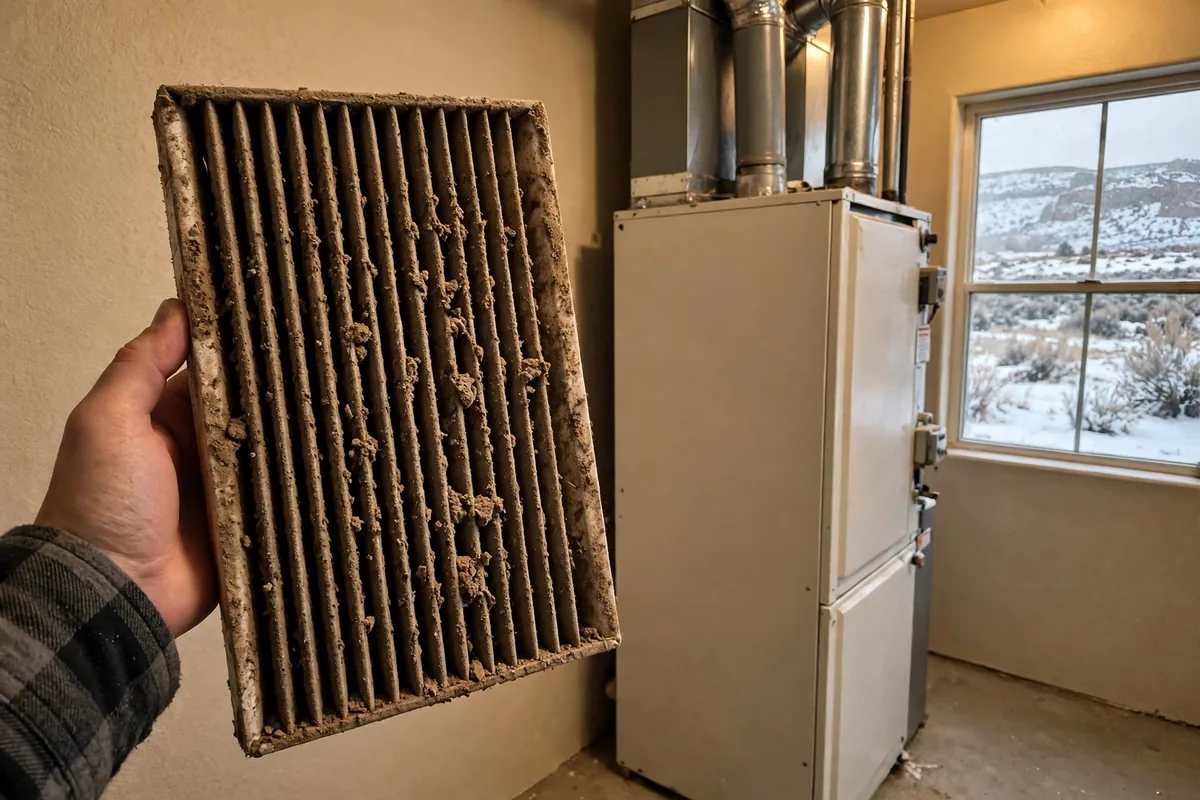
Green River sits in a river valley in high desert, where wind follows the river corridor and cold air settles along the water on still nights. A furnace here runs long hours against that pairing, and desert dust loads filters faster than in a sheltered town, which chokes airflow and can trip a furnace on overheating. A filter that looks fine in October can be gray and clogged by January.
Snow along the river brings vent trouble too: high-efficiency furnaces vent through sidewall pipes that drift shut in a river-valley storm, and a furnace that locks out after snow often has a vent problem rather than a failed part. If your Green River furnace stopped after a storm, check the outside pipes for drifts, and call us if clearing them does not bring steady heat back.
Green River seasons
Green River fall is the time to prepare, with a tune-up that cleans desert dust from burners and sensors and checks the blower before the long cold season. Winter brings the real test: river-valley cold, wind, and snow that blocks vents, when a weak igniter or clogged filter turns into a night without heat.
Spring brings wind and dust that load filters again, and summer is the calm window for planned replacements and duct sealing. The EPA indoor air guidance at epa.gov explains why clean filters and sound venting matter for indoor air, and we check both on every Green River visit.
Furnace help
Green River needs river-valley furnace work for mining families and hillside homes. Each line below is written for this town.
01
A Green River emergency call after a river storm starts with vent drifts and filter condition, since those two cause more failures than broken boards.
02
Installing a furnace in a Green River mining-era home means planning ducts through old runs, where heat loss can undo a good new unit.
03
When a Green River furnace fails each winter, replacement matched to the house and its ducts ends the yearly patch cycle.
04
A Green River tune-up cleans desert dust from burners and sensors before the long river-valley cold settles in.
05
Gas furnaces heat most of Green River, and river wind plus dust make venting checks and filter changes the top priorities.
06
Green River apartment electric furnaces run on two power legs, and a failed leg leaves the unit blowing lukewarm air that feels like a dying furnace.
07
Homes outside Green River on propane face desert cold and long supply runs, so tank and regulator health get checked first on rural calls.
08
Green River desert dust is the blower enemy here, and a wheel coated in fine grit vibrates, wears bearings, and finally seizes on a cold night.
09
Green River trona dust is fine enough to coat exchanger surfaces, and a coated exchanger transfers less heat while running longer, which shows up as lukewarm rooms.
10
Green River thermostats near west-facing windows chase afternoon sun, calling for less heat just as river cold builds in the evening.
11
Green River older duct runs under river-town houses sit in damp crawl spaces, and a joint that rusted through there dumps warm air under the house.
12
A Green River safety inspection puts venting and combustion first, since river wind and drifting snow can block a flue that worked in summer.
13
Green River manufactured homes in mining neighborhoods use belt-driven blowers that squeal before they fail, and that sound is the warning to call before a cold night.
14
Green River mining offices run around the clock in shifts, so their commercial furnaces get controls that hold steady heat through crew changes at night.
15
Green River mining households sleep days and work nights, so their zones need bedroom heat at noon and living-room heat at midnight, the reverse of a standard program.
Local answers
Desert dust and river-valley wind load filters faster here than in many towns, and a filter that looks fine in fall can be gray by midwinter. A clogged filter chokes airflow, overheats the furnace, and can trip safety switches. Checking monthly in winter and changing whenever the filter looks clogged is the right habit in Green River.
Snow may have drifted against the sidewall vent pipes, which trips a safety switch and locks the furnace out. Clear drifts gently from the pipes and see if the unit restarts, but call us if it locks out again, since repeated lockouts point to venting, pressure-switch, or ignition trouble that needs a technician.
Hillside homes face more wind and colder nights than valley homes, and the windward rooms lose heat fastest. Long duct runs add to the problem by losing warmth before it reaches far rooms. Sealing leaks, balancing dampers, and zoning the windy side usually evens the house out better than raising the thermostat.
Yes. Mining and energy households often need bedrooms warm in the morning after a night shift, while a standard thermostat program heats living rooms in the evening. A schedule built around the household hours, or zoning for bedrooms, fixes this without heating empty rooms all day.
A tune-up cleans the burner and flame sensor, checks ignition and the blower, tests safety controls, and inspects venting and the filter. In Green River we also check for desert dust buildup, which is a local wear factor. A fall tune-up catches weak parts before winter turns them into a no-heat call.
When repairs repeat every winter, parts grow hard to find, or the furnace cannot hold the thermostat setting on cold nights despite clean filters and sound ducts, replacement is usually the sensible step. A new unit matched to the house and its ducts, rather than just to square footage, gives the most even heat in a river-valley winter.
Tell us your area, your filter condition, and what the furnace is doing. We will walk through the safe checks and arrange a visit.
Call (307) 309-8601 Contact Frontier Heating