01
Emergency Furnace Repair
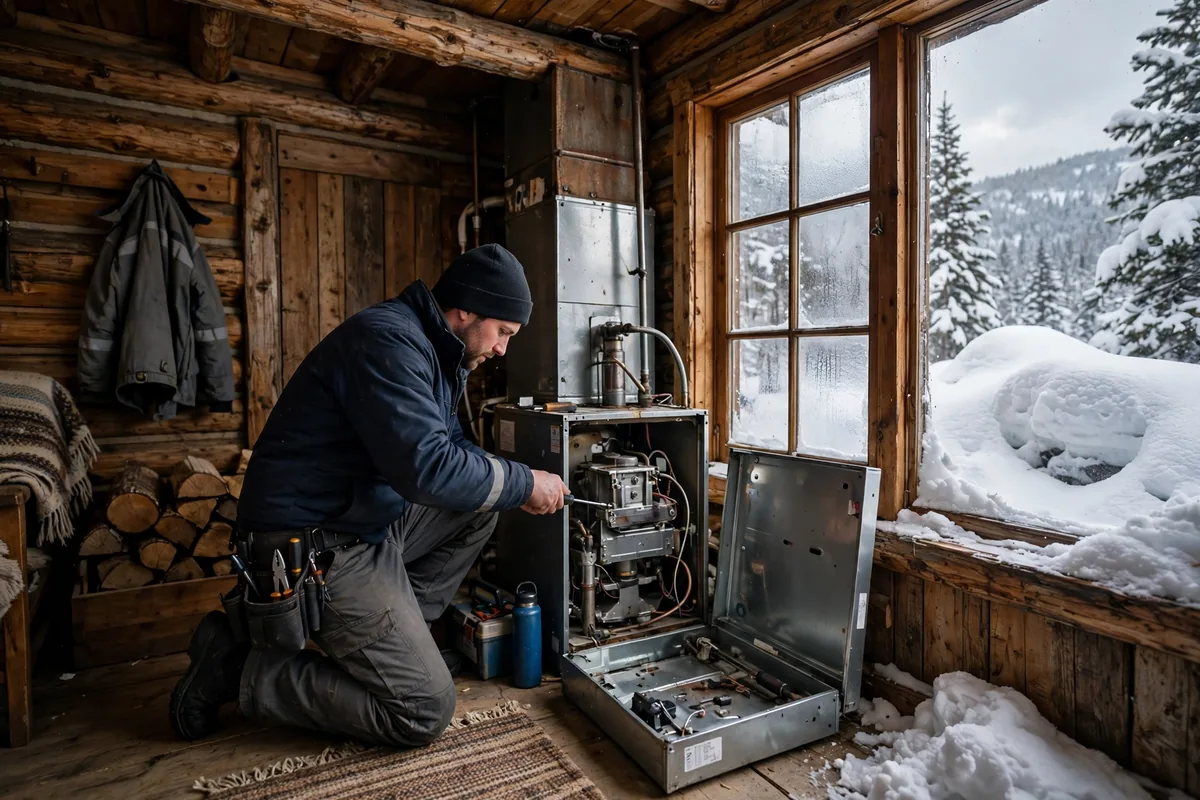
A Jackson emergency call after a mountain storm starts with buried vents and freeze risk, since snow and empty homes combine dangerously here.
Mountain valley heat
Jackson sits in a mountain valley in Teton County, surrounded by the Tetons and the Gros Ventre range, where winter snow piles deep and cold settles over the valley floor. Homes here mix log cabins, resort houses, and older ranch homes, and many stand empty for stretches between visits, which makes a furnace failure a freeze risk before anyone notices.
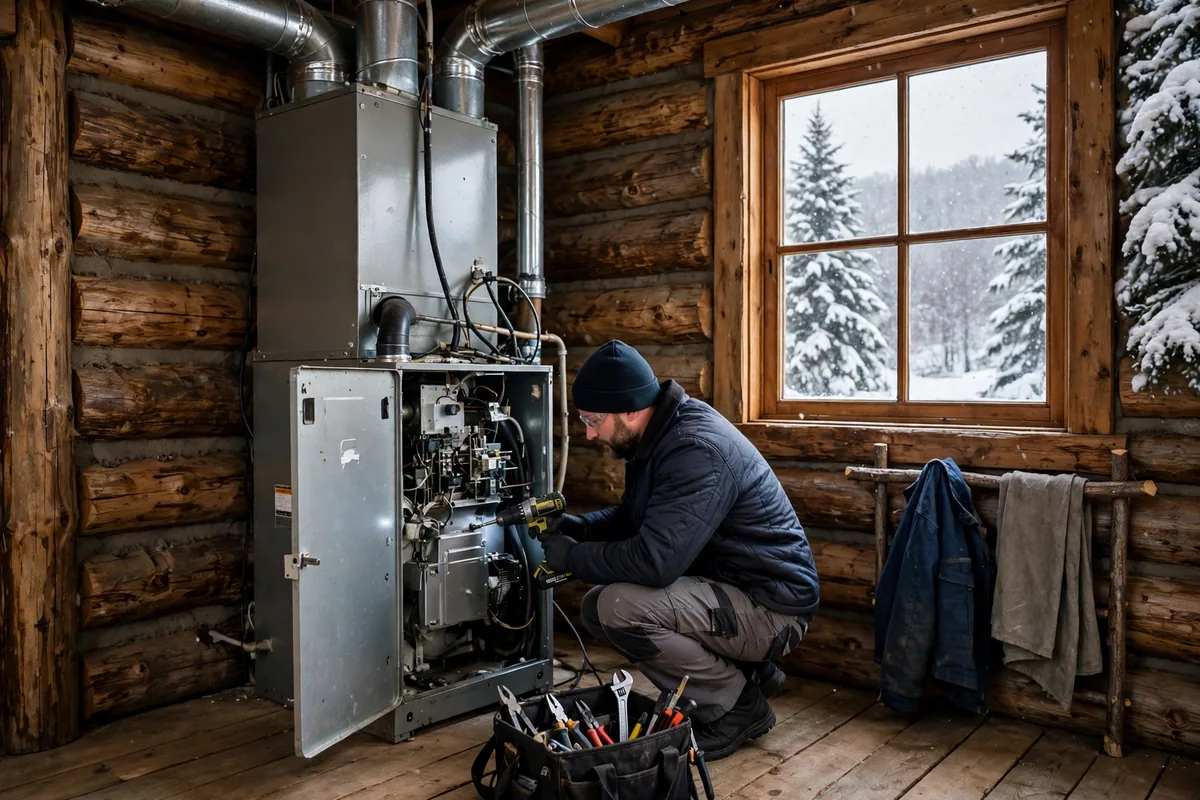
The furnace pattern in Jackson is mountain-shaped: heavy snow that buries vents, valley inversions that trap cold, and second homes where a small problem grows while the house sits empty. We check venting, safety controls, and freeze risk on every Jackson visit, because in this valley a furnace is also the pipe protection for the whole house.
Jackson homes
Jackson housing is unlike any other town on this site: log cabins with tall great rooms, resort houses with large glass walls facing the mountains, and older ranch homes near town, plus many second homes that sit empty for weeks. Large glass walls lose heat fast on cold nights, tall rooms stratify warm air near the ceiling, and empty homes hide furnace failures until pipes freeze.
Tourism shapes Jackson heating too, with rental cabins that need reliable heat for guests and employee housing that needs steady warmth on modest budgets. A furnace that serves a rental cabin needs safety controls and freeze protection checked as carefully as its heating output, since a guest call about a cold cabin is also a call about a house at risk.
Jackson landmarks
Jackson landmarks are unmistakable: the Town Square with its antler arches, the National Elk Refuge just north of town, and Jackson Hole Mountain Resort at Teton Village, with Grand Teton rising beyond and the Snake River running through the valley. Most homes sit between the town square and the resort, and most furnace calls come from that corridor.
Those landmarks mark snow and exposure for us. Homes near the resort face deeper snow and colder nights, town homes face valley inversions, and hillside homes face wind. A landmark near your address helps us plan the visit around the snow and cold your furnace is fighting.
Three Jackson landmarks anchor our visits: the Town Square antler arches, the National Elk Refuge, and Jackson Hole Mountain Resort at Teton Village. Most Jackson furnace calls fall near one of them.
Jackson furnace buried in snow or locked out? Call us and tell us if the home is occupied.
Call (307) 309-8601Jackson seasons
Jackson heating season starts early and ends late, with snow possible well outside the months other towns call winter. Fall is the time to prepare: a tune-up that cleans the burner, tests safety controls, and checks vent placement can prevent the midwinter call when snow is deep and roads are slow.
Winter brings the deep-snow and inversion pattern at its worst, and spring brings melt that matters for furnaces in lower levels. Summer is short but useful for planned replacements and for setting up freeze protection in second homes. The EPA home pages at epa.gov cover indoor air and heating safety basics, and we follow the same checks on Jackson visits.
Jackson valley
Jackson valley winter brings snow measured in feet, not inches, and that snow buries sidewall vents, intake pipes, and exhaust terminations that were clear in fall. A furnace that locks out after a Jackson storm often has a vent problem, not a broken part, and clearing snow from the pipes is the first safe check. Repeated lockouts after clearing point to vent placement or drainage trouble that needs a technician.
Valley inversions add a second Jackson pattern: cold air pools on the valley floor while warmer air sits above, so furnaces in low homes run longer than furnaces on the hillsides. A home near the valley floor can need more heat than a similar home a few hundred feet higher, and we account for that elevation and exposure when we size and tune a system.
Jackson areas
Downtown Jackson and the Town Square area hold the oldest commercial streets and nearby homes, South Park and Rafter J Ranch hold family streets south of town, and Wilson and Teton Village sit toward the resort with larger mountain homes. East and west Jackson fill in the valley floor with a mix of older and newer houses.
Each area faces different snow and cold. Town homes sit lower and more sheltered, resort-area homes sit higher and snowier, and valley-floor homes sit in pooled cold. When you call, tell us the area and whether the home is occupied or empty, since an empty-home furnace gets a freeze-risk check first.
We serve Jackson and nearby Teton County communities, including these areas.
Downtown JacksonTown Square areaSouth ParkRafter J RanchWilsonTeton VillageEast JacksonWest Jackson
Jackson ZIP codes we cover: 83001.
Furnace help
Jackson needs mountain-valley furnace work for cabins, resort homes, and second homes. Each line below is written for this valley.
01
A Jackson emergency call after a mountain storm starts with buried vents and freeze risk, since snow and empty homes combine dangerously here.
02
Installing a furnace in a Jackson log cabin means planning heat for tall rooms and glass walls, where warm air stratifies and cold glass steals heat.
03
When a Jackson furnace fails in a second home, replacement with reliable controls and freeze protection matters as much as heating output.
04
A Jackson tune-up in fall cleans burners and sensors and checks vent placement before the mountain snow arrives.
05
Gas furnaces heat much of Jackson, and valley inversions plus deep snow make venting and combustion checks the top priorities.
06
Jackson second-home electric furnaces need freeze alarms paired with the heater, since an element failure in an empty cabin is silent until pipes burst.
07
Homes outside Jackson on propane face mountain cold and long supply runs, so tank and regulator health get checked first on rural calls.
08
Jackson blower motors wear from a long mountain season, and a noisy blower earns a filter and duct check alongside any motor work.
09
Jackson resort homes hide exchanger damage behind tall great rooms and long flues, so we measure flue gases rather than trusting a quick visual look.
10
A thermostat in a Jackson great room misreads stratified warm air near the ceiling, so we check placement and fan settings on tall-room homes.
11
Ductwork in Jackson cabins and resort homes loses heat through long runs, and balancing those runs warms far rooms better than a bigger furnace.
12
A Jackson safety inspection centers on venting and carbon monoxide risk, since buried vents and inversions can combine unsafely.
13
Jackson workforce manufactured homes sit on leased pads with skirting that traps cold air, so we check skirting vents and belly insulation alongside the furnace.
14
Jackson hotels and restaurants run kitchens and lobbies at different temperatures all day, and we separate those zones so dining rooms stay warm without overheating the kitchen.
15
Zone controls help a Jackson home with a tall great room and cold bedrooms, by heating rooms on their own needs instead of one setting for all.
Local answers
Deep snow can bury sidewall vent pipes and exhaust terminations, which trips a safety switch and locks the furnace out. Clearing snow gently from the pipes sometimes restores heat, but repeated lockouts point to vent placement trouble. In Jackson, vents placed where snow drifts pile up will fail again, so placement matters as much as clearing.
A failed furnace in an empty Jackson home can freeze pipes before anyone notices, so second homes need a fall safety check, a steady thermostat setting, and someone local to check that heat is running during cold stretches. If you arrive to a cold house, do not force the furnace repeatedly; call us and check for frozen pipes and vent blockages first.
Tall rooms stratify, with warm air pooling near the ceiling while the living level stays cold. Large glass walls add heat loss at the same time. Fan settings, duct placement, and zoning can push warm air down and even the room out, while a thermostat at ceiling height will misread the whole space.
Yes. Cold air pools on the valley floor during inversions, so low homes run longer than hillside homes on the same night. A furnace that keeps a hillside home warm can fall behind in the valley, which is why we account for elevation and exposure, not just square footage, when we size and tune Jackson systems.
Early fall is best, before mountain snow arrives and before the busy winter season. A fall tune-up cleans the burner and flame sensor, tests safety controls, and checks vent placement. Waiting until the first deep snow risks a no-heat call when roads are slow and every heating company is busy.
An odd smell on first fall startup can be dust burning off, but a persistent smell, soot, or a yellow or wavering flame needs a prompt safety check. Jackson valley inversions can affect vent draft, so a furnace with those signs should not run unchecked. Turn it off if the smell is strong or alarms sound, and call us.
Tell us your area, whether the home is occupied, and what the outside vents look like. We will talk through the safe checks and book a visit.
Call (307) 309-8601 Contact Frontier Heating