Furnace Replacement
Swapping an old unit for a new one, sized and set up for the house.
New heat, fitted right
A new furnace should fit the house it heats, not just the space in the furnace room. We measure the home, look at the ducts, check the fuel supply, and then fit a unit that can hold steady heat through a Wyoming winter. This page explains how we choose, fit, and test a new furnace, and what you can expect on the day.
Choosing
A furnace that is too large heats in short bursts, leaves cold corners, and wears itself out with constant starting and stopping. One that is too small runs all night and still leaves the house cold. Sizing starts with the home itself: floor area, ceiling height, insulation, window area, and how wind hits the walls. Those details matter more in Wyoming than in milder states, because the gap between a mild day and a hard night is so wide.
We also look at the ducts before we recommend a unit. Narrow or leaky ducts can choke even a well-chosen furnace, and a blower that cannot push air through them will leave far rooms cold. Fuel matters too: natural gas, propane, and electric each suit different homes, and our gas furnace services and propane furnace services pages explain how those systems differ. The unit we fit is the one the house can actually use.
Fitting
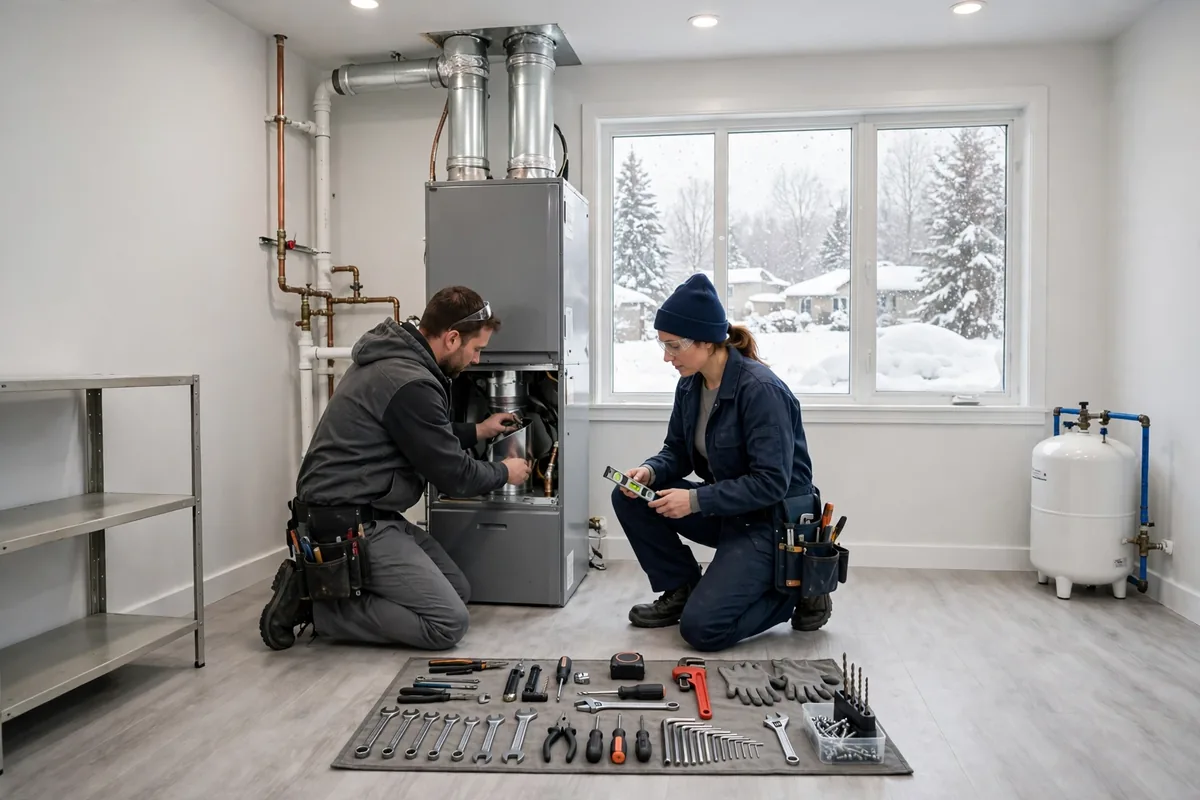
We start by protecting floors and doorways, then remove the old unit and check the pad, the vent path, and the duct connections it leaves behind. Surprises hide in those spots: a vent that no longer meets the new unit, a return opening that is too small, or wiring that needs tidying before the new furnace goes in. We sort those out before the new unit is set, not after.
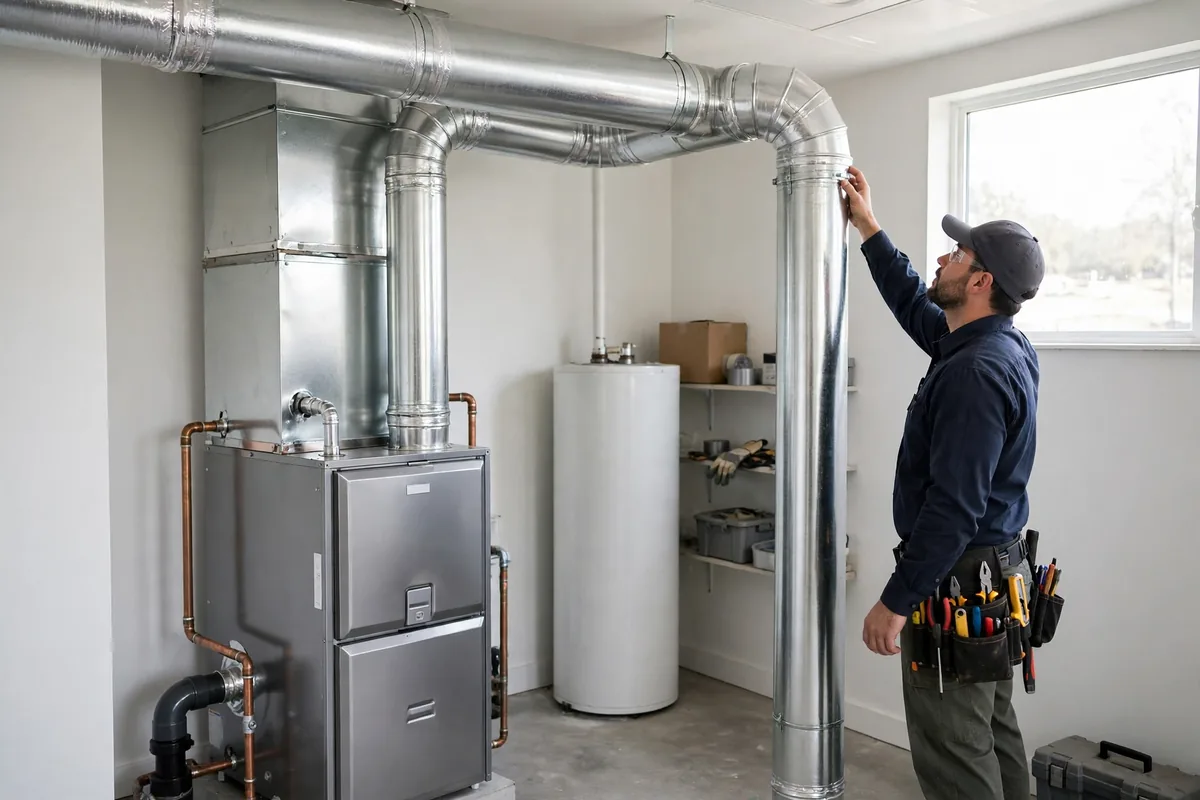
Once the new furnace is in place, we connect fuel, venting, power, and controls, then seal the duct joints so heated air reaches rooms instead of leaking into the furnace room. The condensate drain gets a proper route and trap where the unit needs one, and the thermostat gets tested against the new controls. A rushed fit shows up later as noise, cold rooms, or a unit that short-cycles, so we take the time to get each connection right.
Planning a new furnace? Call Frontier Heating and talk through sizing for your home.
Call (307) 309-8601Testing
Testing starts with a full heating cycle from a cold start. We watch the burner light, check that the flame holds steady, and measure the air temperature rise across the unit. Then we walk the house room by room, feeling vents and listening for whistling ducts or rattling panels. A furnace that passes in the furnace room but leaves a bedroom cold has not passed yet.
We also test the safety controls: the limit switch that guards against overheating, the rollout and pressure switches on gas units, and the carbon monoxide alarm near the furnace room. You get a walk-through of the new thermostat and filter location before we leave, so the first cold night does not bring a hunt for a manual. If anything looks off during testing, we fix it there and then.
Comparing
Installation makes sense when the old unit has failed a major part, when repairs keep returning each winter, or when the furnace no longer heats the whole house even after repair. It also makes sense during a remodel or an addition, when the heating load of the house has changed. A new unit fitted to the new load heats rooms the old one never reached.
Repair still wins when the fault is a single part on a unit that otherwise runs well. Our emergency furnace repair page covers that call, and our furnace replacement page explains the swap in detail when the old unit has reached the end of its useful life. We lay out both options when the choice is close, and we never push a new unit where a sound repair would do.
A furnace that never quite warms the house may be the wrong size. Call us to check.
Call (307) 309-8601Living with it
The habits that protect a new furnace are simple. Change the filter on schedule, keep vents open and unblocked by furniture, and keep the furnace room clear so air can move and a technician can work. A yearly maintenance and tune-up visit keeps burners clean, sensors accurate, and small wear from turning into a midwinter failure.
The U.S. Department of Energy publishes guidance on choosing and maintaining home heating equipment, and its energy saver material is a useful second opinion on sizing and upkeep. See energy.gov energy saver guidance before you buy, and ask us anything it raises. A furnace chosen well and looked after simply runs quieter, heats more evenly, and asks for less attention year after year.
Size comes from the home, not from the old unit's label. Floor area, insulation, windows, ceiling height, and local cold all feed the calculation, along with the duct system the furnace must push air through. A technician measures the house and works out the load, rather than matching the old furnace, which may itself have been wrong.
Most straightforward swaps take a day, while jobs that need vent changes, duct adjustments, or a fuel conversion take longer. The visit includes removal of the old unit, fitting and connection of the new one, and a full test cycle with a room-by-room check. We tell you the expected shape of the day before work starts.
Not always. If the ducts are sound and sized right, they stay. If they leak badly, are undersized for the new unit, or leave far rooms cold, fixing them is part of doing the job properly. We check the ducts before recommending a unit, so duct work is never a surprise added at the end.
Often, yes, when the old unit was the wrong size or the ducts were holding it back. Sizing the new unit to the house and checking duct capacity are part of the job. If a room stays cold after a proper fit, the cause is usually a duct or airflow problem, and we track it down rather than leaving it.
Yes. Homes without natural gas usually use propane or electric heat, and each needs its own setup. Propane needs a tank and a supply line, while electric needs adequate electrical capacity. We look at what the home already has and what each option needs before recommending one.
We remove it and take it away as part of the visit, unless you ask us to leave it. The furnace room is left clean, and any vent or duct opening left behind is sealed or adapted for the new unit. Nothing is left blocking the new installation.
It is often worth doing, since an old thermostat can misread temperature or fail to use the new furnace's controls well. We test the existing thermostat first, and if it reads accurately and works with the new unit, it can stay. A new control is recommended when the old one is unreliable.
Sometimes. Different furnace types vent differently, and a vent that suited the old unit may not suit the new one. We check the vent path during the visit and adjust it where needed, since venting affects both safety and performance. No new furnace is left running on a vent that does not match it.
Autumn is the natural choice, before the heating season starts, but a failed furnace sets its own timetable. A planned autumn install lets the work happen without a cold house waiting on it. If the old unit fails in winter, the swap happens as soon as the home can be heated safely again.
Tell us about the house, the old unit, and the rooms that stay cold. We will measure the home, check the ducts and fuel supply, and fit a unit that holds steady heat through a Wyoming winter.
Call (307) 309-8601