Blower Motor Repair
The motor and wheel that push warm air through the ducts.
Even heat, every room
A good furnace cannot heat rooms its ducts cannot reach. Crushed runs, leaking joints, blocked returns, and vents closed by furniture all steal heat before it arrives, and the furnace gets blamed for rooms it never had a chance to warm. This page explains how duct and airflow faults are found and fixed.
Symptoms
The pattern gives it away. The furnace runs, rooms near it feel warm, and far rooms stay cold, or one room never catches up no matter how long the furnace runs. A whistling vent, a rattling duct, or dust blowing from a vent all point the same way. When the furnace itself tests well but rooms differ wildly, the ducts are the next place to look.
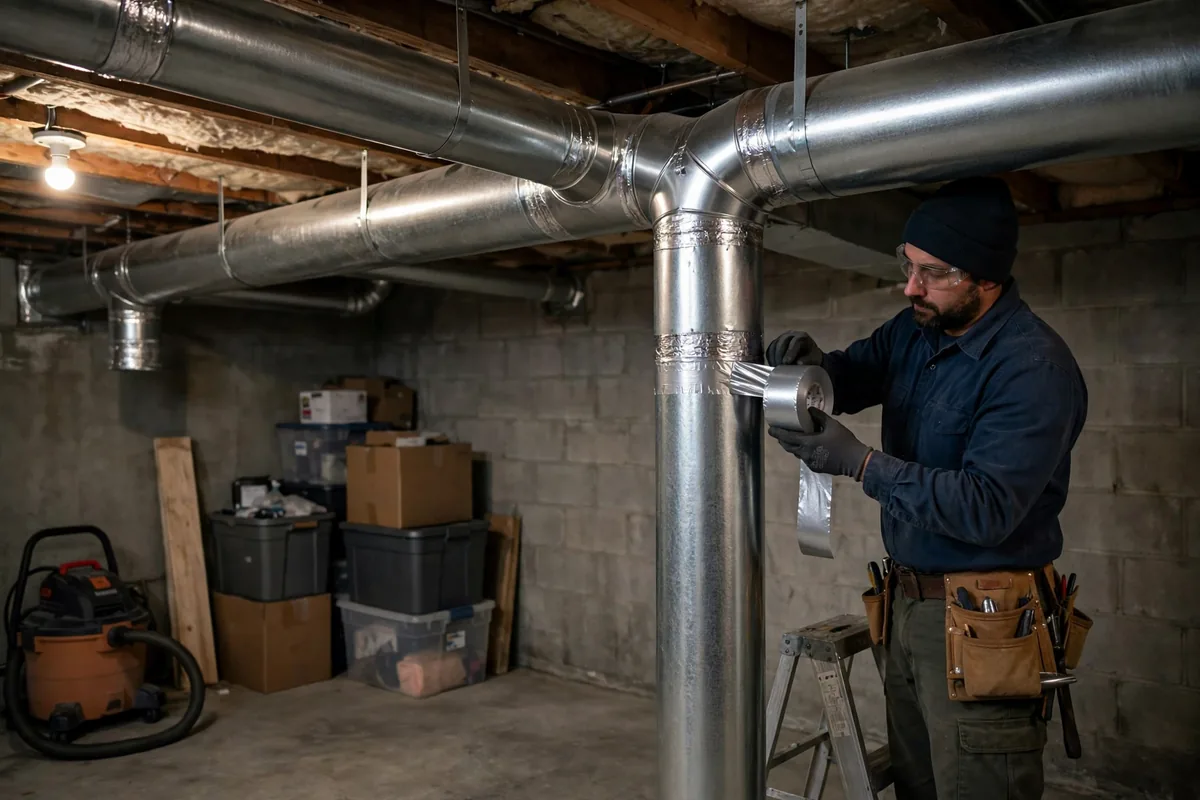
Leaks are the quietest fault. A joint that has opened in an attic, crawl space, or furnace room spills heated air where nobody lives, so the furnace runs longer to hold the same temperature. Sealing those joints often improves comfort more than any furnace adjustment, and it is found by inspection, not by guessing.
Inspection
Inspection follows the air: from the furnace supply plenum along each run to its vent, and back along the return path. We look for crushed flexible runs, disconnected joints, blocked returns, and vents buried behind furniture or rugs. A run that sags or kinks chokes airflow as surely as a closed damper.
Airflow at each vent is felt and compared. A vent with a whisper of air next to one with a strong flow tells us where the restriction sits. Where the layout is unclear, a look inside the run with a light shows blockage or collapse. Our blower motor repair page covers the furnace end of airflow, since a weak blower and bad ducts cause similar symptoms and are often found together.
Far rooms staying cold while near rooms roast? Call Frontier Heating about airflow.
Call (307) 309-8601Fixes
Sealing comes first. Open joints get sealed with mastic or foil tape made for ducts, not cloth tape that dries and falls off. Crushed runs get straightened or replaced, and sagging runs get supported so they hold their shape. Blocked returns get cleared, and vents get checked for dampers stuck shut.
Balancing comes last. Dampers on each run are adjusted so near rooms do not hog the air while far rooms starve. The goal is evenness, not maximum flow at one vent. After balancing, we walk the house again, feeling each vent, so the fix is proven room by room rather than assumed at the furnace.
Design limits
Some homes were built with ducts too small for the furnace, or with a single return for a whole floor. Those layouts cap what any furnace can do, and no adjustment fully overcomes them. In that case we explain the limit plainly and talk about what can be improved: an added return, a resized run, or a re-route that shortens the longest path.
Additions and remodels often create the mismatch, since a furnace sized for the original house now feeds rooms the ducts never planned for. Our furnace controls and zone heating page covers zoning, which helps homes where different areas need different amounts of heat. The U.S. Department of Energy covers duct performance in its energy saver material. See energy.gov energy saver guidance for that background.
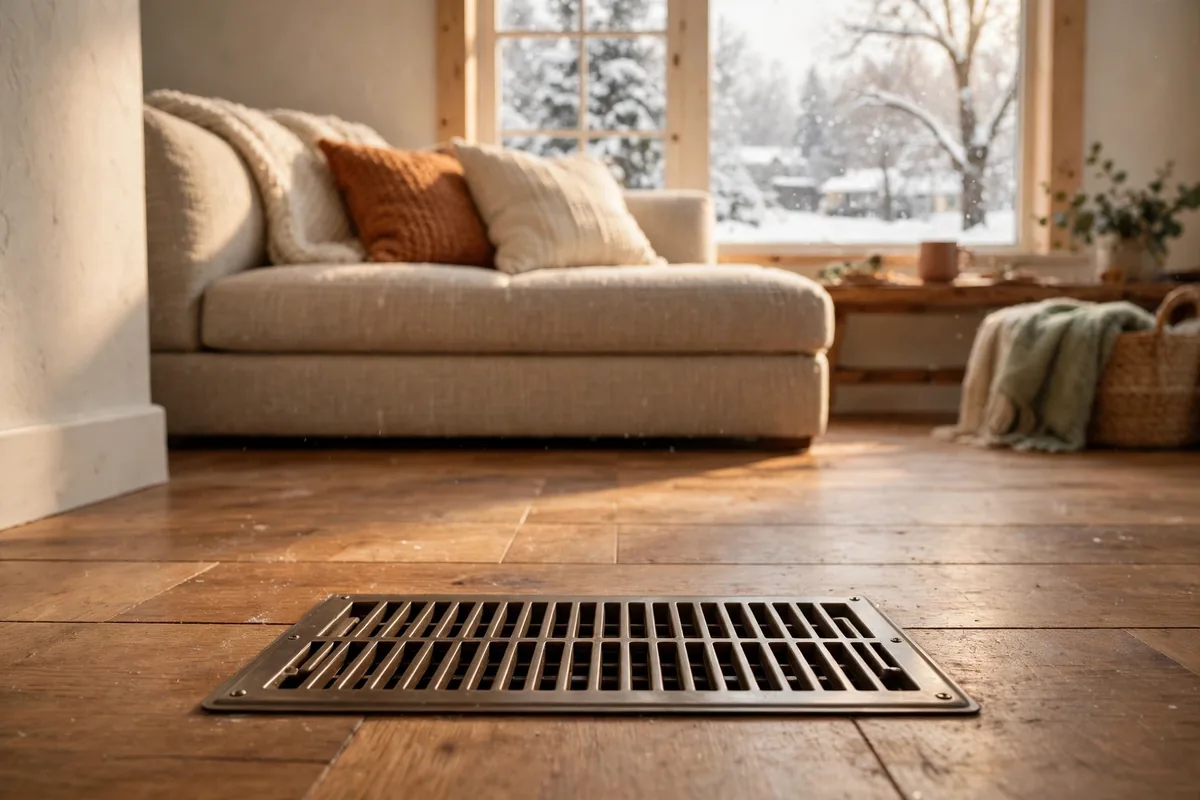
Whistling vents and dusty air point at the ducts. Call us for a look.
Call (307) 309-8601Homeowner care
Keep vents open and uncovered. Closing vents in unused rooms does not save heat the way people expect; it raises pressure in the ducts, strains the blower, and can overheat the furnace. Furniture, rugs, and curtains over vents have the same effect, room by room.
Change the filter monthly in winter, since a clogged filter starves the whole system at its source. And keep the return vents clear, especially the large one near the furnace room. Those three habits cost little, and they protect both the ducts and the blower that feeds them.
Usually airflow, not the furnace. A far room on a long or crushed duct run gets less air, and a room with a blocked return gets less still. Leaking joints spill heat before it arrives. Comparing airflow at each vent shows where the restriction sits.
No, it usually hurts. Closed vents raise duct pressure, strain the blower, and can overheat the furnace by trapping heat. The furnace also runs longer to hold temperature. Keeping vents open and balancing dampers heats the house more evenly. If a room truly needs less heat, a damper adjustment during a balancing visit does the job without straining the blower.
Signs include dust blowing from vents, uneven room temperatures, a furnace that runs long hours, and visible gaps at joints in accessible runs. An inspection of the duct path finds open joints, and sealing them is often the most effective single fix.
Duct cleaning removes dust and debris from inside runs, and it helps where buildup is heavy. It does not fix leaks, crushed runs, or poor layout. Cleaning is worth doing when inspection shows buildup, but it is not a cure for uneven heating on its own.
Balancing adjusts the dampers on each duct run so air is shared fairly between rooms. Near rooms are throttled slightly so far rooms get their share. The result is even temperatures rather than one hot room and one cold one.
Each has a place. Flexible runs are easier to route but crush and sag more easily, which chokes airflow. Metal runs hold shape better but cost more to route. What matters most is sizing, support, and sealing, whichever material is used.
Whistling usually means air forced through a narrow gap: a partly closed damper, a crushed run, or a vent cover that does not match the duct. Finding the restriction and opening the path ends the whistle, rather than covering the vent.
Runs through cold spaces such as attics and crawl spaces benefit from insulation, since bare metal loses heat on the way to the room. Insulation is checked during an inspection, and uninsulated runs in cold spaces are flagged as part of the findings.
With every furnace maintenance visit in practical terms, since the technician is already in the furnace room and can see the main runs. A full duct inspection is worth doing when rooms heat unevenly, after a remodel, or when the furnace is replaced.
Tell us which rooms lag and which vents feel weak. We walk the duct run joint by joint, seal what leaks, and balance what remains, then prove it room by room.
Call (307) 309-8601