01
Emergency Furnace Repair
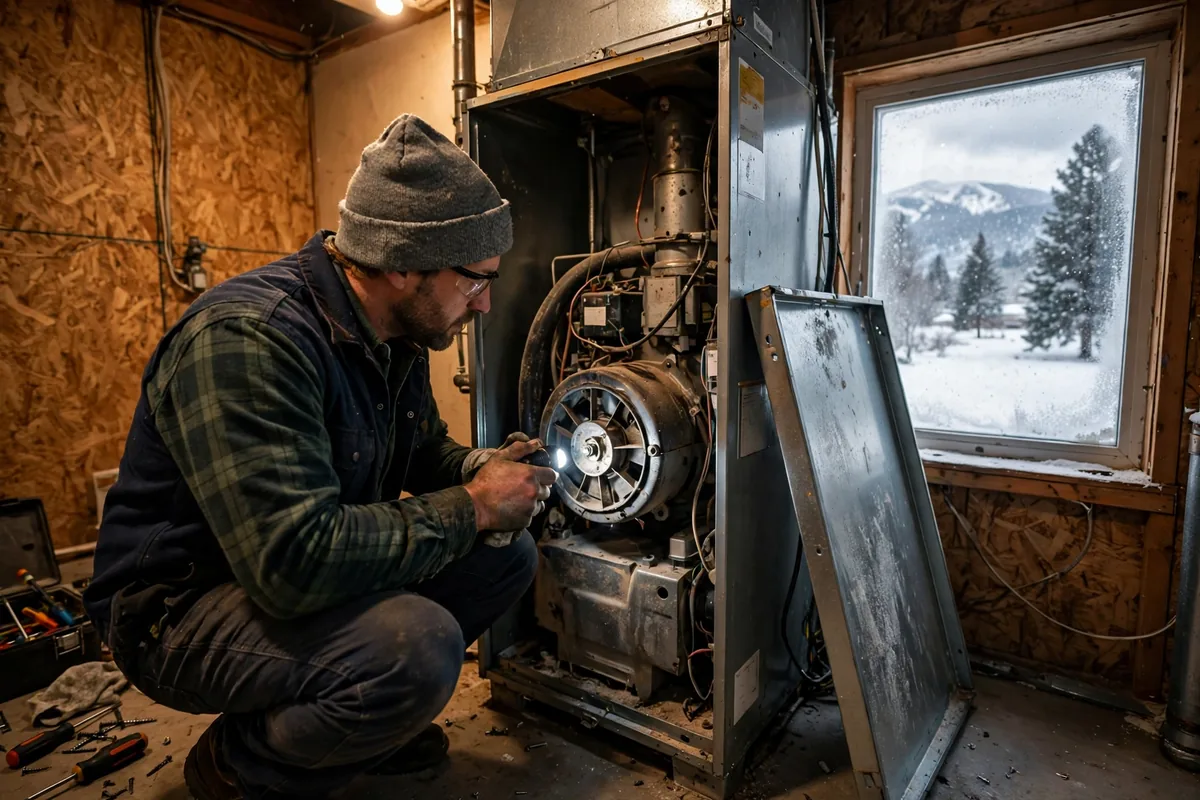
A Sheridan emergency call on a pooled-cold night starts with ignition and airflow, since still valley air exposes weak parts that breeze days hide.
Bighorn foothill heat
Sheridan sits where the plains meet the Bighorn Mountains, a ranching and tourism town with a handsome Main Street and homes that range from historic houses near downtown to newer streets on the edges. At about 3,757 feet it is lower than many Wyoming towns, but foothill cold still bites, and valley air can trap cold over town on still winter nights.
Sheridan furnaces fail in a foothill pattern: a home that heats fine on a breezy day goes cold when the air stills and cold pools in the valley, or a furnace that served a small historic house struggles after an addition doubles the rooms it must heat. We check the house, the ducts, and the furnace together, because the fix often lives in the system, not in one part.
Sheridan seasons
Sheridan fall is the season to prepare, because the first pooled-cold nights arrive before deep winter and expose weak igniters and dirty flame sensors. A tune-up in fall that cleans the burner, tests ignition, and checks the blower can prevent the January call when cold air sits over the valley for days and every heating company is busy.
Winter brings the pooled-cold pattern at its worst, with still nights that test furnace capacity and windy days that test air sealing. Spring brings Bighorn runoff and damp basements, which matters for furnaces and ducts below grade. Summer is the calm window for planned replacements. ENERGY STAR heating guidance at energystar.gov covers the same maintenance checks we run on Sheridan visits.
Sheridan areas
Sheridan neighborhoods are best described by their anchors: downtown and Main Street hold the oldest homes, the college area mixes student rentals with family streets, and the north and south sides spread toward open ground and the foothills. Each area carries a different furnace story, from old chimneys downtown to newer sidewall vents on the edges.
Formal named subdivisions are few in Sheridan, so we describe areas by their landmarks and directions rather than inventing subdivision names. When you call, tell us the nearest landmark and the house age, and we will know whether to expect an old chimney, a long duct run, or a newer vented system.
We serve Sheridan across Sheridan County, including these areas. Formal named subdivisions are few here, so areas are described by landmark and direction.
Downtown SheridanNorth SheridanSouth SheridanSheridan College areaMain Street corridorBighorn foothills edge
Sheridan ZIP codes we cover: 82801.
Sheridan furnace cold on a still night? Call us and tell us which rooms went cold first.
Call (307) 309-8601Sheridan foothills
Sheridan foothill geography shapes its furnace trouble. Cold air drains down from the Bighorns and pools in the valley on still nights, so a furnace that kept up during a breezy afternoon can fall behind after midnight when the valley fills with cold air. Homes in low spots feel this most, and a thermostat in a warm hallway may never register how cold the low rooms have become.
Wind from the mountains adds the opposite problem on other days, driving cold air through gaps and cooling the windward side of a house fast. A Sheridan visit therefore checks both patterns: air leaks and duct balance for windy days, and furnace capacity and airflow for still, pooled-cold nights. One check without the other misses half the town weather.
Sheridan homes
Sheridan housing mixes historic homes near Main Street, with tall rooms and old ductwork, and newer subdivisions on the town edges with tighter construction and larger footprints. The historic homes often hide their furnace trouble in long duct runs and uninsulated rooms, while the newer homes hide it in a furnace sized for a calm lot on an exposed, windy edge.
Ranching and tourism shape Sheridan households too, with working ranches outside town and visitor homes that sit empty for stretches. An empty house with a failing furnace can freeze pipes before anyone notices, so we watch thermostat settings and safety controls for homes that stand vacant in winter, and we check vacant-home furnaces with freeze risk in mind.
Sheridan landmarks
Sheridan landmarks give every address a reference: the Sheridan Inn on Main Street, Trail End State Historic Site nearby, and the Bighorn National Forest rising to the west, with the college on the east side of town and Interstate 90 running past. Most homes sit between Main Street and the foothills, and most furnace calls come from that band.
Those landmarks also mark weather exposure. Homes toward the foothills face colder drainage air and more wind, while homes near downtown sit lower and more sheltered but older. Naming a landmark when you call helps us plan the visit around the house type and the cold your furnace is fighting.
Three Sheridan landmarks anchor our visits: the Sheridan Inn on Main Street, Trail End State Historic Site, and Bighorn National Forest access to the west. Most Sheridan furnace calls fall near one of them.
Furnace help
Sheridan needs foothill-aware furnace work, and each line below is written for this Bighorn-edge town.
01
A Sheridan emergency call on a pooled-cold night starts with ignition and airflow, since still valley air exposes weak parts that breeze days hide.
02
Installing a furnace in a Sheridan historic home means matching ducts to tall rooms and long runs, not just swapping the cabinet.
03
When a Sheridan furnace fails after an addition, replacement sized for the larger house beats patching a unit that was never meant to heat it.
04
A Sheridan tune-up in fall cleans burners and sensors before the first still, cold valley nights arrive.
05
Sheridan gas furnaces in historic homes share flues with water heaters, and a shared flue that worked for decades can fail when one appliance is replaced.
06
Electric furnaces in Sheridan rentals and additions can lose an element quietly, leaving one zone cold while the rest of the home heats.
07
Homes outside Sheridan on propane face foothill cold and long supply runs, so tank and regulator condition get checked first on rural calls.
08
Sheridan blower motors wear from long valley-winter runs, and a noisy blower earns a filter and duct check alongside any motor work.
09
Sheridan historic homes with original chimneys put extra strain on exchangers when drafts stall, and we pair every exchanger look with a chimney draft reading.
10
Sheridan two-story thermostats in upstairs halls call the furnace off while the main floor shivers, and zoning the floors apart fixes what no setting change can.
11
Sheridan Main Street building ducts share chases with old chimneys, and heat lost into a cold chase never reaches the shop floor below.
12
A Sheridan safety inspection centers on chimneys and vents, since pooled cold air can stall a draft that worked in summer.
13
Sheridan manufactured homes on the town edges face foothill wind under the floor, and we insulate exposed crossover runs that the wind cools first.
14
Sheridan Main Street shops heat storefronts with big glass windows, and their commercial systems fight glass heat loss with perimeter warmth rather than brute output.
15
Zone controls help a Sheridan home with a cold low room and a warm upper floor, by sending heat where the pooled cold settles.
Local answers
Cold air drains from the Bighorns and pools in the valley on still nights, so temperatures can fall sharply after midnight even when the evening felt mild. A furnace that kept up during the day may fall behind as pooled cold deepens. Long runs, a clean filter, and balanced ducts help, and a furnace that cannot hold the thermostat setting on still nights should be checked.
Historic homes often have tall rooms, old ductwork, and chimneys that need draft checks, so a visit should look beyond the furnace cabinet. Duct leaks and unbalanced runs are common, and a chimney that drafts poorly in pooled cold air can cause lockouts or safety trouble. A technician familiar with older homes checks all three together.
Heat rises, so an upstairs that warms while the downstairs stays cold often points to duct balance, a weak blower, or a return-air shortage downstairs. In Sheridan, low rooms also sit in pooled cold air, which makes the pattern worse. Balancing dampers and checking returns usually evens the house out better than raising the thermostat.
Yes, because a furnace failure in an empty home can go unnoticed until pipes freeze. A fall safety check, a thermostat setting that holds steady heat, and working carbon monoxide alarms are the basics for a vacant winter home. If you leave a Sheridan home empty, arrange for someone to check that heat is running during cold stretches.
Foothill wind drives cold air through gaps and cools the windward side of a house fast, forcing the furnace into long runs. Air sealing around windows, doors, and attic hatches helps as much as any furnace part, and a blower that runs constantly on windy days may be fighting leaks rather than failing on its own.
Fall is best for tune-ups and planned work, before pooled-cold nights and the busy winter season. Emergency work happens all winter, but a fall visit that replaces a weak igniter or cleans a flame sensor can prevent the coldest-night call that Sheridan homeowners dread.
Tell us your area of Sheridan, which rooms are cold, and what the furnace is doing. We will talk through the safe checks and book a visit.
Call (307) 309-8601 Contact Frontier Heating