Furnace Maintenance and Tune-Up
A yearly visit that catches small wear before winter tests it.
Furnace lifespan in Wyoming
A furnace in Wyoming does not live on a calendar. It lives through long heating seasons, sharp cold snaps, wind-driven snow, and high-altitude air, so two furnaces of the same age can be in very different shape. The honest answer is that care, fuel type, and how hard each winter pushes the unit matter more than the year on its nameplate.
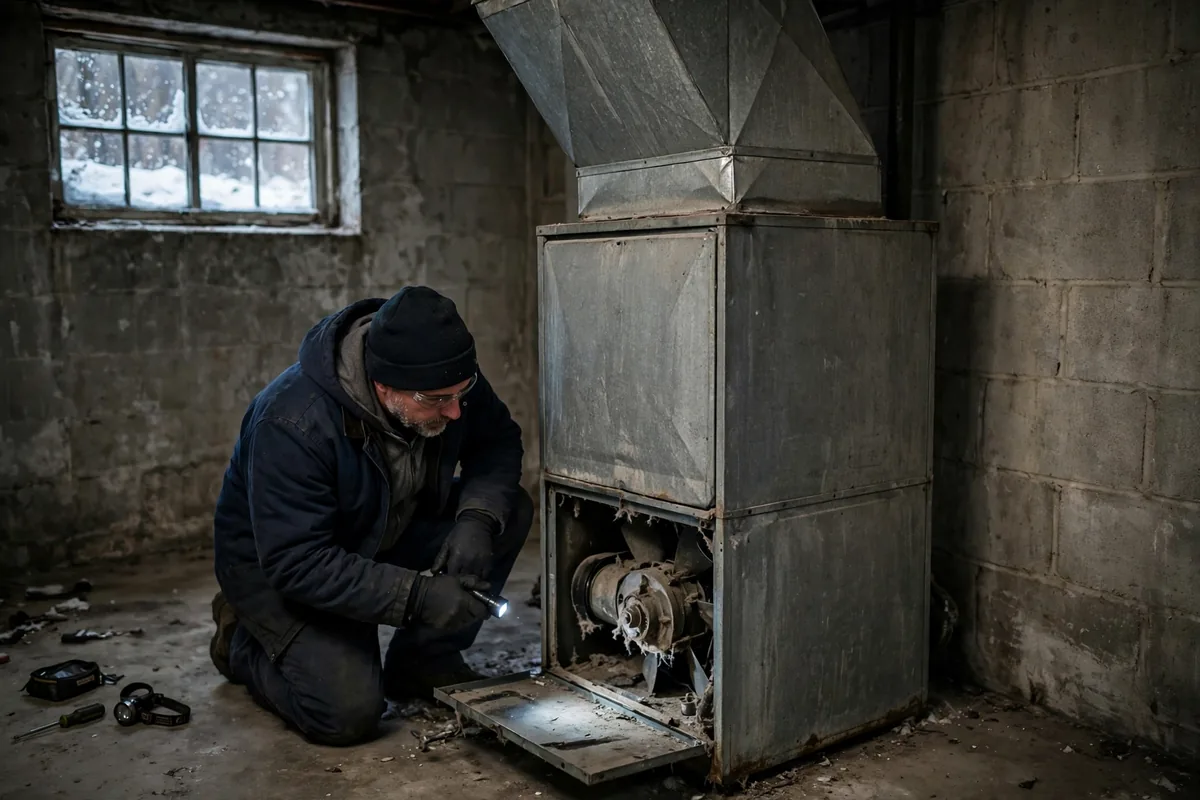
Wyoming asks more of a furnace than a mild climate does. The heating season runs long, nights stay cold for months, and wind finds every draft, so the unit cycles on and off far more often. Each cycle warms and cools metal parts, and that repeated movement slowly wears burners, motors, and controls.
Altitude adds its own strain. Thin air changes how a flame burns, and a furnace that was never set up for high country can run rough or soot up over time. Homes in mountain towns and open plains also face snow that blocks vents and intake pipes, which forces the unit to work harder just to breathe. A furnace that gets steady attention usually handles all of this far better than one that is ignored until it stops.
Most furnaces do not fail all at once. A blower motor grows noisy, an igniter stops lighting reliably, or a flame sensor gets coated and shuts the unit down for safety. These are the parts that move, spark, or sit in heat, so they wear first, and catching them early keeps a small fault from turning into a cold house.
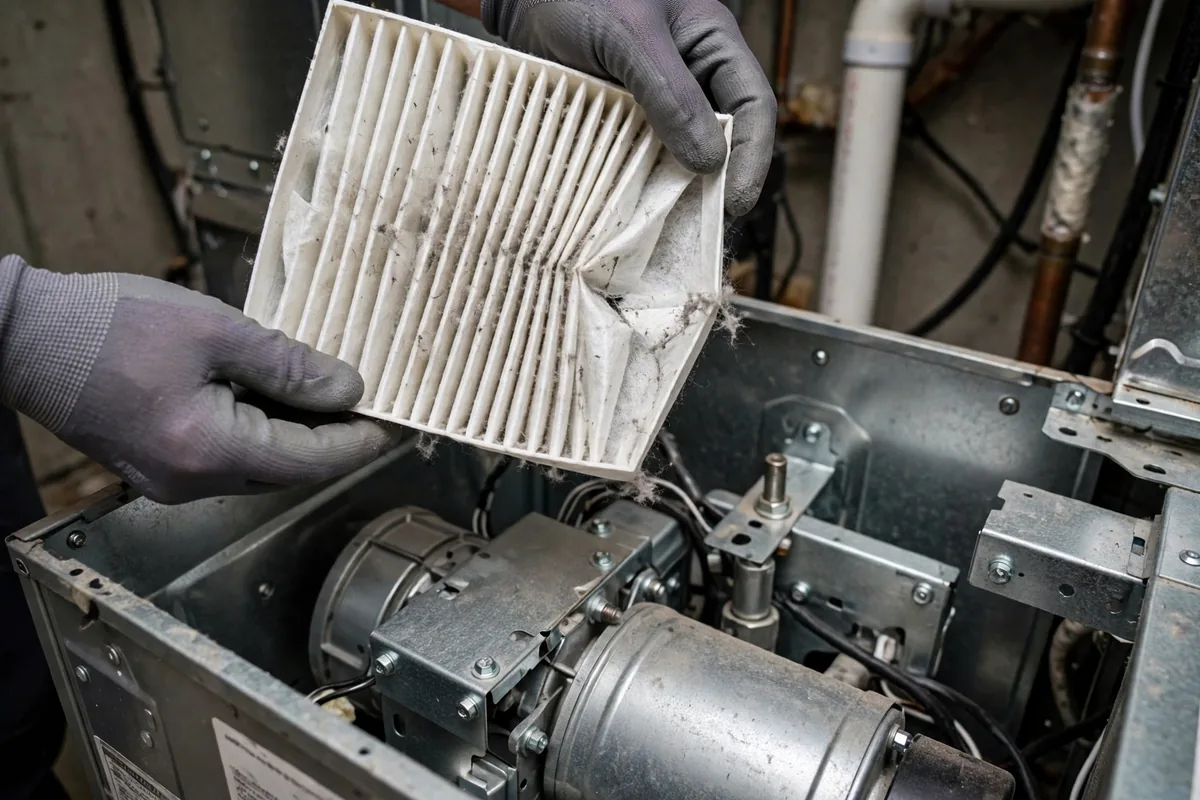
The heat exchanger is the part that matters most for safety. It is the metal wall between flame and the air your family breathes, and cracks there can let combustion gases into the ductwork. That is why a cracked exchanger usually ends the conversation about repair, and why our heat exchanger checks look closely at that wall on older units.
Not sure how much life your furnace has left? Call us and talk it through.
Call (307) 309-8601The simplest habit is also the most skipped: keep the filter clean and the area around the furnace clear. A clogged filter starves airflow, overheats the unit, and shortens motor life, while boxes stacked against the cabinet trap heat and block service access. Changing filters on a regular rhythm through winter is cheap insurance in a state where the furnace may run most of the day.
A yearly visit before winter does the rest. A technician can clean burners, test ignition, check venting, and spot a motor that is starting to drag. ENERGY STAR explains certified furnaces in its ENERGY STAR furnaces guide, and the same habits apply double in Wyoming, where a breakdown in January is a different problem than one in April. Our furnace maintenance and tune-up visits follow that seasonal rhythm.
Age alone is not a reason to replace a working furnace, but it is a reason to plan. Once a unit has served through many Wyoming winters, parts get harder to find, repairs come closer together, and a midwinter failure becomes more likely. Planning ahead lets you pick a replacement on a calm day instead of during a storm, when every choice feels rushed.
Watch the pattern, not just the age. Two repairs in one season, rooms that never quite warm up, or a unit that needs coaxing to stay lit all point the same way. If that pattern shows up, talk through the options before the next cold snap, and keep the house warm in the meantime with steady thermostat settings and clear vents.
A newer home can help, because tighter walls and better ductwork mean the furnace cycles less to hold temperature. But a new home does not protect a neglected unit. Filters, venting, and yearly attention still decide how long it serves, whatever the age of the house around it.
Yes, and cabins are a Wyoming special case. A cabin that sits empty through cold weeks, then gets heated hard on a weekend, puts sharp swings on the unit. Pipes, vents, and controls also sit cold and damp between visits, which adds wear that a lived-in home never sees.
It can be, when the fault is a single part and the heat exchanger is sound. A new igniter or motor on an otherwise solid unit is a sensible repair. When faults stack up or the exchanger is cracked, that money is usually better held toward a replacement.
Look for the rating plate inside the cabinet door, which usually carries a serial number that encodes the build date. If the plate is worn or missing, a technician can often date the unit from its model and parts. Age helps you plan, but condition matters more than the number alone.
No, because they wear in different places. Gas and propane units deal with flame, ignition, and venting, while electric units wear through heating elements and controls. Fuel type shapes which parts fail first, so a fair comparison looks at the whole unit, not just its birthday.
It helps in the most practical way: it catches small wear before it strains other parts. Clean burners, clear airflow, and a motor that is not dragging all reduce the stress of every cycle. No visit can stop age, but steady care keeps a unit running well for longer.
A pattern, not one event. Repairs that come closer together, heat that fades in the far rooms, or a unit that cycles oddly all suggest the end is near. One noisy night is a repair. The same trouble returning through a season is a signal to plan.
Planning ahead is wise once repairs stack up or parts grow scarce, because a planned swap happens on your schedule. Replacing a healthy unit early, though, throws away good years. The middle path is to plan the choice while the old unit still heats.
It can, because thin air changes combustion and can leave a flame running rich or lean if the unit was never adjusted for elevation. Poor combustion soots parts and stresses the exchanger over time. A high-country setup check is worth doing when a furnace is installed or starts running rough.
Talk with Frontier Heating about your furnace age and condition.
Call (307) 309-8601