Gas Furnace Services
Burner, ignition, and venting work for homes on natural gas.
How condensing heat works
A condensing furnace is a gas furnace that wrings a second round of heat from its own exhaust before that exhaust leaves the house. In an ordinary furnace, hot exhaust goes straight up the vent and takes its leftover heat with it. A condensing unit cools that exhaust to capture more heat, which is why it needs a drain and special venting that an older furnace never had.
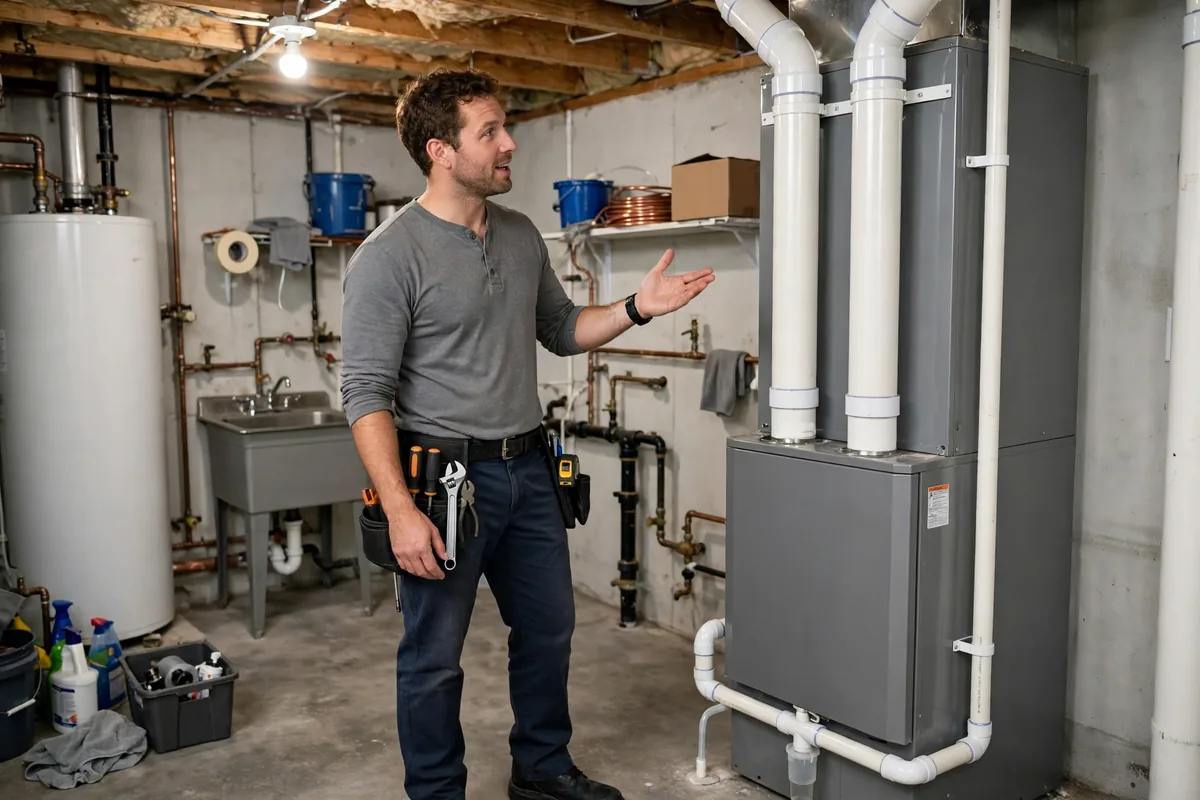
A condensing furnace starts like any gas furnace: a burner lights, a heat exchanger warms air, and a blower sends that air through the ducts. The difference comes after the first pass. Instead of sending hot exhaust straight outside, the unit runs it through a second heat exchanger, which pulls more heat out of the gases before they leave. That extra heat goes into the house, not up the vent.
Cooling exhaust has a side effect: water condenses out of the gases, and that water must drain away. A condensing furnace therefore has a condensate drain, a trap, and a pump or gravity line that an older furnace does not need. That drain is small, quiet, and easy to forget, and in Wyoming it is also the part that needs the most winter attention.
The second heat exchanger is the heart of the design. It is built from materials that can handle acidic condensate, because cooled exhaust water is mildly corrosive, and it must stay clean to keep transferring heat. Around it sit the parts that manage the new flows: a condensate trap that keeps exhaust gases from backing up the drain, a drain line that carries water away, and vent pipes that run to the outside wall rather than up a chimney.
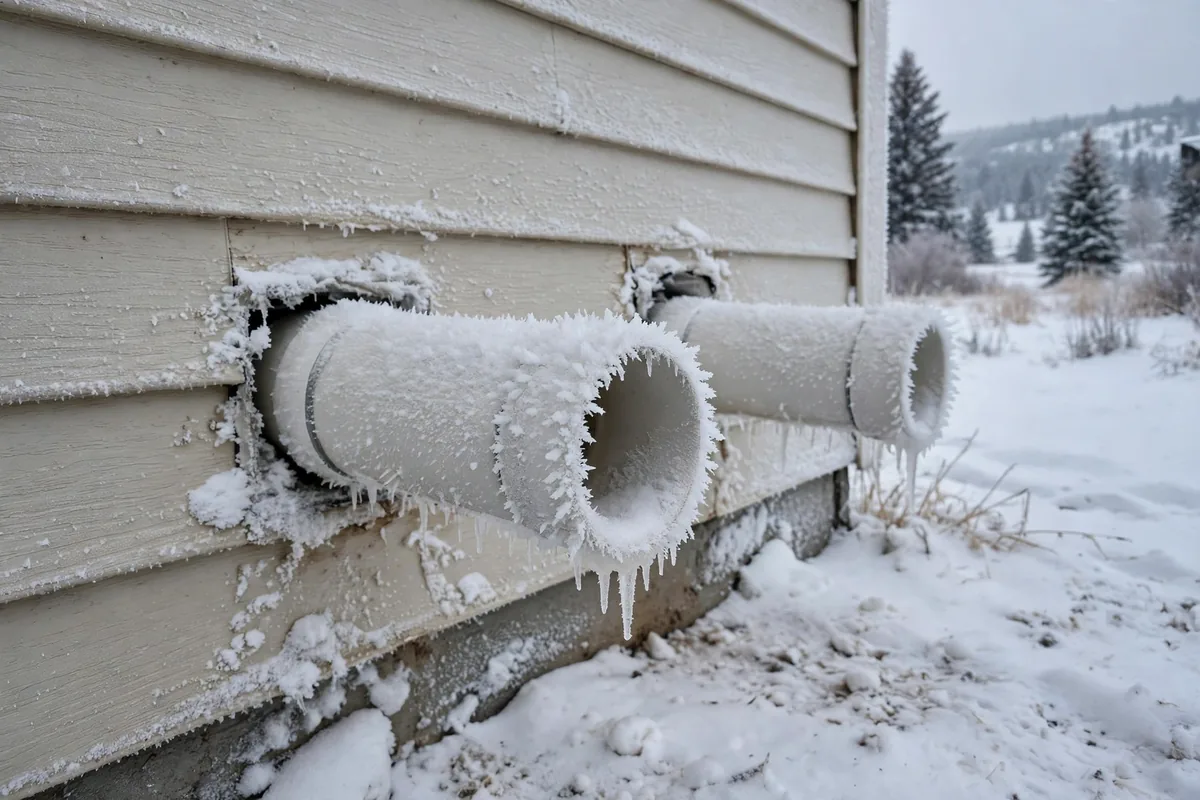
Those plastic vent pipes are the most visible clue that a furnace is condensing. Older furnaces vent through hot metal flues, while condensing units vent through cooler plastic pipes, often straight out a side wall, which suits many Wyoming homes but also puts the vent where snow can bury it.
Curious whether a condensing furnace fits your home? Call Frontier Heating and ask.
Call (307) 309-8601Condensate is water, and water freezes. In a Wyoming cold snap, a condensate drain that runs through a cold space, or a vent pipe that ends low on a wall, can ice up and shut the furnace down on its own safety controls. That shutdown is the unit protecting itself, but it still leaves a house cold, and it is the most common winter complaint with condensing furnaces in cold climates.
The fixes are practical: keep drain lines in warm space, insulate any run that must cross a cold area, and keep side-wall vents clear of snow drifts after storms. Our furnace controls and zone heating work is separate from this, but the same winter habit applies: check the outside of the house after wind and snow. A condensing furnace that is installed with its drain and vents planned for Wyoming cold runs through winter without drama, while one fitted without that planning will remind you of the oversight on the coldest night.
A condensing furnace suits a home that needs steady gas heat, has a place to drain condensate safely, and can keep its side-wall vents clear of snow. It suits town and rural homes alike, as long as the drain and venting are planned for the site. Homes with a sound older furnace need not rush into one.
It suits less well where no safe drain route exists, or where vents cannot be kept clear through drifting snow. In those cases, a well-fitted standard furnace, or a different fuel, may serve the house better. The EPA pages on average carbon monoxide levels in homes list the steps that keep combustion equipment properly adjusted, and our gas furnace services cover both condensing and standard gas units, so the choice can be made on your house, not on a single feature.
Yes, because cooling exhaust makes water that must drain away through a trap and drain line. That drain is part of the design, not an add-on, and it needs a route that will not freeze in winter. A blocked or frozen drain will shut the furnace down.
Usually not through an old chimney alone, because its cooler exhaust and plastic venting suit a side-wall route instead. Chimney venting can sometimes be adapted with a liner, but the vent route must be planned for condensing exhaust, not assumed from the old furnace.
The most common winter cause is a frozen condensate drain or a snow-blocked vent, both of which trip safety controls. Check vents for snow and the drain for ice first, then call if the unit still will not run. The shutdown itself is the unit protecting the house.
A condensing furnace adds a second heat exchanger that pulls extra heat from exhaust gases before they leave, while a regular furnace sends that exhaust straight out. The extra heat is why it uses less fuel, and the cooled exhaust is why it needs a drain and plastic venting.
Yes, condensing design works with propane as well as natural gas, as long as the unit is set up for the fuel it burns. The second heat exchanger, drain, and venting work the same way, and the winter drain and vent habits are the same too.
The furnace usually shuts down on its safety controls, because it cannot safely keep running with nowhere for the water to go. Thawing the drain and keeping it in warm space prevents repeat shutdowns, and a frozen drain is a sign the drain route needs improving.
Not noticeably. The blower, inducer fan, and ductwork set the sound level, and those are similar across furnace types. A condensing unit may have a small drain pump sound, but it stays quiet beside normal furnace operation through a heating cycle.
Yes, condensing exhaust runs cooler and needs plastic venting to a side wall or a planned route, not a hot metal flue alone. Vent placement must also stay clear of snow drifts, which is a real planning point in Wyoming.
It can be, if the cabin has a safe drain route and vents that stay clear between visits. A cabin that sits empty through storms needs extra care, because a frozen drain can shut the furnace down unnoticed. For a cabin, drain and vent planning matter even more.
Call Frontier Heating to talk about condensing furnaces for your Wyoming home.
Call (307) 309-8601